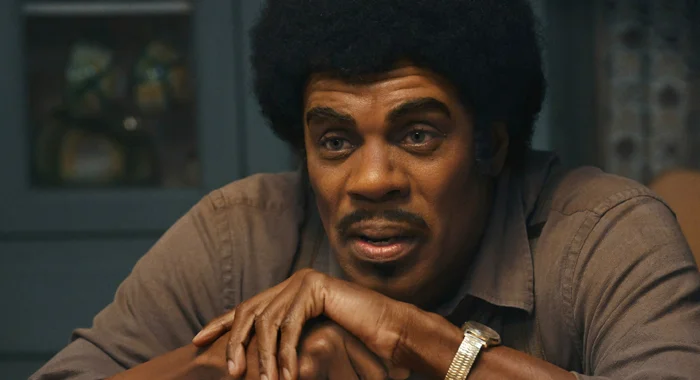
Michael Biopic: Initial Critical Reception Highlights Spectacle Over Depth
·5 min read
The long-awaited Michael Jackson biopic, Michael, hits theaters this Friday, and the initial wave of reviews is in. Here's the thing: while it's poised to be a crowd-pleaser for die-hard fans, the critical consensus points to a film that’s more of a glossy concert spectacle than a deep, nuanced look at the King of Pop. It feels less like an honest exploration and more like a carefully curated experience, which frankly, isn't a surprise given the subject.
Reviews are definitely mixed, but a pattern emerges quickly: those who just want to relive the music and the magic will likely walk away satisfied. For anyone hoping for a more honest, perhaps even challenging, portrayal, it seems the film falls short.
Here's the thing: no one thought replicating Michael Jackson on screen would be easy. But the overwhelming sentiment is that Jaafar Jackson, Michael’s nephew and Jermaine Jackson's son, pulls it off with remarkable authenticity. We're talking about a portrayal critics are calling "nothing short of remarkable." Linda Marric from HeyUGuys found his performances "unexpectedly emotional," saying it "didn't feel like imitation; it felt like memory." That's a powerful statement.
Reviewers consistently highlight Jaafar's ability to capture the "King of Pop's" essence. Julian Roman at MovieWeb simply states he "dazzles," while Liz Declan from Screen Rant even goes as far as suggesting it's "as close to resurrecting the King of Pop as a movie can get," making it "easy to forget that he isn’t actually Michael Jackson."
It's not just about the look. Yasmine Kandil over at Discussing Film notes that Jaafar nails the "voice, the charisma, the dance moves," predicting a performance that "is talked about all year long." Owen Gleiberman of Variety echoes this, praising how he "nails the look, the voice, the electrostatic moves" and, more importantly, "the mixture of delicacy and steel that made Michael who he was." David Rooney from The Hollywood Reporter points to his "uncanny recreation of Michael’s dance skills," specifically "the unique combination of fluidity and snappy angularity." Derek Smith for Slant Magazine sums it up: the most captivating parts of the film are "almost solely due to Jaafar’s ability to embody both Michael’s timid awkwardness off stage and his magnetic exuberance on stage." This is the core strength, the element that seems to "hold the movie together and give it meaning," according to Gleiberman.
For a film about a visual icon, you'd expect a strong aesthetic. David Rooney of The Hollywood Reporter points out that Dion Beebe shoots the performance sequences with "visual electricity." That's a good sign for anyone hoping for a grand cinematic experience.
However, the consensus on the computer-generated imagery is far less forgiving. Yasmine Kandil notes that "visual effects, primarily used to replicate audiences during massive concert sequences, are often unrefined." It's a recurring criticism. Liz Declan finds Bubbles' CGI design "distractingly out of place in a movie that is otherwise so visually stunning." Melissa Ruggieri for USA Today minces no words, calling the CGI versions of animals — "a llama, giraffe, python and yes, Bubbles the chimp" — "cringeworthy," so much so that they can derail empathy for Jackson's character. If you’re going to spend big on a biopic, you’d hope the VFX budget wasn't cut short on the supporting cast, especially a famous chimpanzee.
The "Part One" Problem
This is where things get truly divisive. *Michael* is being released as "Part One," a decision that draws significant skepticism from critics. The immediate implication is that the film deliberately sidesteps the darker, more controversial aspects of Michael Jackson's life. Mike Ryan at The Hard Pass plainly states, "If I didn’t know any better, based on this movie, I’d assume Michael Jackson died shortly after *Bad* was released." He suspects the movie makers would be "just fine with people thinking that’s what happened." It's a fair point.
Owen Gleiberman, though, offers a more optimistic — or perhaps cynical, depending on your view — take. He sees the "franchise" approach as a potential "opportunity: to maybe get into that dark side after all" in a future installment. But let’s be real, Pete Hammond from Deadline Hollywood Daily puts it more bluntly, questioning "whether the Jacksons want to keep cashing in, even if it gets unsavory." For Siddhant Adlakha of IGN Movies, this potential continuation feels less like a promise and "more like a threat."
If you’re a fan primarily interested in the music and the spectacle, *Michael* (opening in theaters on April 24, 2026) appears to deliver on the strength of Jaafar Jackson's performance, capturing much of the "compelling urgency" Gleiberman points out in Jackson’s journey to self-realization. However, if you’re looking for a comprehensive, unvarnished look at the King of Pop’s entire life, including its shadows, "Part One" clearly leaves much to be desired. This film seems less like a biopic and more like a carefully curated concert experience, aiming squarely at the loyal fanbase. Whether that gamble pays off in broader critical and commercial success beyond the initial release remains to be seen. You can check out the trailer below:
Find out more about *Michael* and other films at Rotten Tomatoes. And to keep up with what's fresh, download the Rotten Tomatoes App.
 Reviews are definitely mixed, but a pattern emerges quickly: those who just want to relive the music and the magic will likely walk away satisfied. For anyone hoping for a more honest, perhaps even challenging, portrayal, it seems the film falls short.
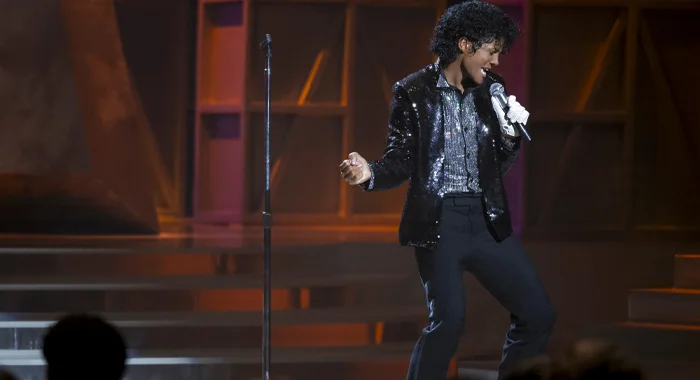 (Photo by Bruce Talamon/©Lionsgate)
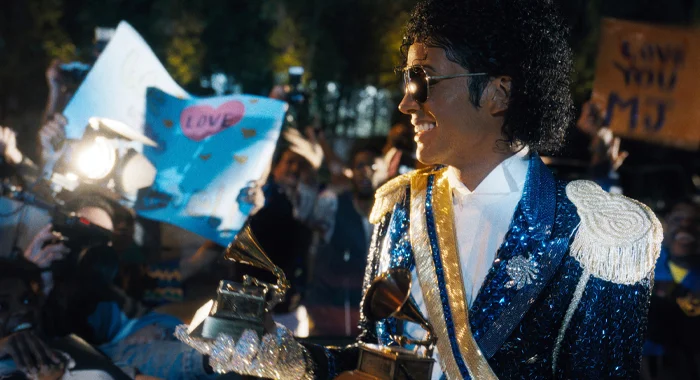
Julian Roman from MovieWeb notes the "objectively good" production design and entertainment value, suggesting you'll "leave the theater wanting to hit the dance floor." Liz Declan at Screen Rant praises the film for living "up to the legendary status of its namesake," citing the casting, costumes, and full-fledged concert performances. Essentially, if you’re showing up for the greatest hits, you're in for a treat.
And yet, this strength seems to be its major weakness. Several critics, including Patrick Beatty of See it or Skip It, describe the movie as "a concert disguised as a biopic." This isn't necessarily a dig for fans, who will "eat this up" and "line up for more than once," per Beatty and Pete Hammond at Deadline. But for those looking for narrative depth, that's where the wheels come off.
(Photo by Bruce Talamon/©Lionsgate)
Julian Roman from MovieWeb notes the "objectively good" production design and entertainment value, suggesting you'll "leave the theater wanting to hit the dance floor." Liz Declan at Screen Rant praises the film for living "up to the legendary status of its namesake," citing the casting, costumes, and full-fledged concert performances. Essentially, if you’re showing up for the greatest hits, you're in for a treat.
And yet, this strength seems to be its major weakness. Several critics, including Patrick Beatty of See it or Skip It, describe the movie as "a concert disguised as a biopic." This isn't necessarily a dig for fans, who will "eat this up" and "line up for more than once," per Beatty and Pete Hammond at Deadline. But for those looking for narrative depth, that's where the wheels come off.
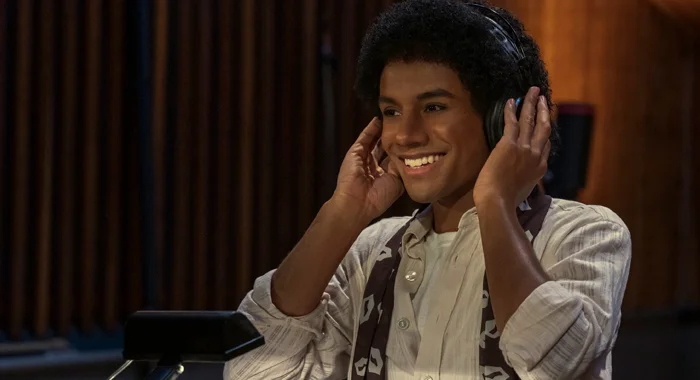 (Photo by Glen Wilson/©Lionsgate)
Josh Parham at Next Best Picture calls the story "completely hollow" and lacking "intriguing conflict." William Bibbiani of The Wrap goes further, labeling it "feature-length publicity" that "plays like damage control." This aligns with Marric's take that screenwriter John Logan's narrative is "conspicuously selective" and his dialogue "overly scripted and predictable." It appears the film's attempts at portraying a "damaged man" (Rooney) or an "intimate look" (Allison Rose at FlickDirect) aren't enough to counteract the overwhelming sense of superficiality for many.
Siddhant Adlakha from IGN Movies perhaps puts it most starkly: "Michael does the impossible: It makes the King of Pop boring." This is a strong indictment for a subject as dynamic as Michael Jackson. The film, in its efforts to create a universally celebratory experience, seems to have sanded down the edges that made him, for better or worse, so utterly compelling. The data doesn't fully explain *why* such a safe approach was taken, but the consensus is clear: it sidesteps critical examination.
(Photo by Glen Wilson/©Lionsgate)
Josh Parham at Next Best Picture calls the story "completely hollow" and lacking "intriguing conflict." William Bibbiani of The Wrap goes further, labeling it "feature-length publicity" that "plays like damage control." This aligns with Marric's take that screenwriter John Logan's narrative is "conspicuously selective" and his dialogue "overly scripted and predictable." It appears the film's attempts at portraying a "damaged man" (Rooney) or an "intimate look" (Allison Rose at FlickDirect) aren't enough to counteract the overwhelming sense of superficiality for many.
Siddhant Adlakha from IGN Movies perhaps puts it most starkly: "Michael does the impossible: It makes the King of Pop boring." This is a strong indictment for a subject as dynamic as Michael Jackson. The film, in its efforts to create a universally celebratory experience, seems to have sanded down the edges that made him, for better or worse, so utterly compelling. The data doesn't fully explain *why* such a safe approach was taken, but the consensus is clear: it sidesteps critical examination.
 (Photo by Hilary Bronwyn Gayle/©Lionsgate)
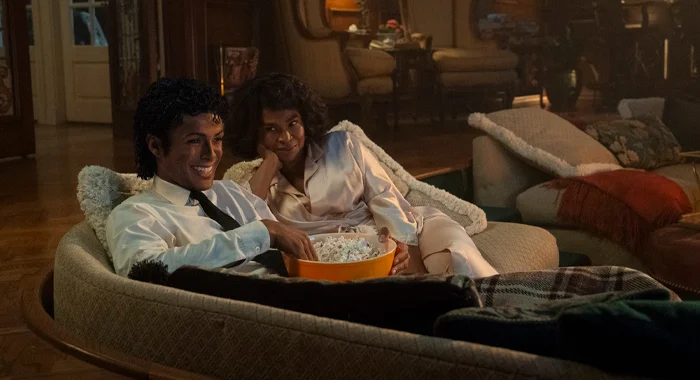
Ultimately, Michael appears to be a film that understands its primary audience: the devoted fans. It offers them a chance to bask in the glow of Jackson's artistry and the nostalgia of his peak years, meticulously recreated. But for those outside that demographic, or for anyone hoping for a narrative that truly grapples with the complexity of its subject, it seems to be a missed opportunity. As David Rooney points out, if you're "unwilling to separate the art from the artist," this movie probably isn't for you. It's a film about how great Michael Jackson *was*, and by extension, how great you are if you're still a fan. That's a stance, for sure, but it's not exactly journalism.
(Photo by Hilary Bronwyn Gayle/©Lionsgate)
Ultimately, Michael appears to be a film that understands its primary audience: the devoted fans. It offers them a chance to bask in the glow of Jackson's artistry and the nostalgia of his peak years, meticulously recreated. But for those outside that demographic, or for anyone hoping for a narrative that truly grapples with the complexity of its subject, it seems to be a missed opportunity. As David Rooney points out, if you're "unwilling to separate the art from the artist," this movie probably isn't for you. It's a film about how great Michael Jackson *was*, and by extension, how great you are if you're still a fan. That's a stance, for sure, but it's not exactly journalism.
 (Photo by ©Lionsgate)Okay, let's break down what the early buzz is saying about *Michael*. What’s immediately clear from the critics is that this isn't just another music biopic; it hinges almost entirely on one surprisingly strong performance.