The Battle for the Big Screen: What CinemaCon 2026 Reveals About Hollywood's Strategy
If you were watching CinemaCon 2026 this past week in Las Vegas, you might have walked away thinking it was business as usual: a flurry of announcements, celebrity appearances, and new trailers. But a closer look at the presentations from Walt Disney Studios and Paramount Pictures, especially on Thursday, reveals something more profound. This wasn't just a rollout of upcoming blockbusters; it was a strategic declaration, a detailed roadmap for how Hollywood’s biggest players plan to reclaim and redefine the theatrical experience in an era dominated by at-home streaming. The real story here isn't *what* specific films are coming out, but *how* these studios are choosing to position them, leveraging everything from deep-seated nostalgia and multiverse-bending narratives to cutting-edge technology and a renewed commitment to the communal experience. The industry is making a clear, aggressive play to prove the cinema is not just surviving, but evolving.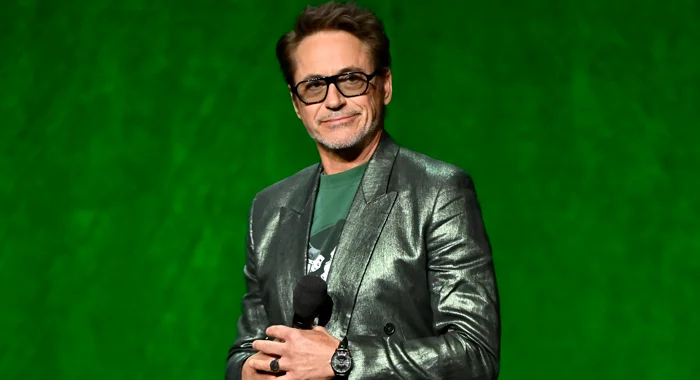
Disney Doubles Down: MCU Resurrection and Thematic Depth
Disney’s presentation was a masterclass in IP management, showcasing its crown jewels with strategic precision. After what many observers have called a period of "franchise doldrums" – a polite way to say some recent Marvel Cinematic Universe entries haven't quite landed with audiences – the studio is pulling out all the stops for *Avengers: Doomsday*. It's been six years since the last full Avengers assembly, and this new film looks poised to be an all-encompassing reset. Consider the trailer: Professor X in the X-Mansion, Doctor Doom voiced by Robert Downey Jr., Gambit fighting Shang-Chi, Yelena Belova against Mystique, Thor battling Doom, plus the Fantastic Four, the Thunderbolts, and Namor. And then the kicker: Chris Evans, as Steve Rogers, wielding Mjolnir. This isn’t just a sequel; it’s a full-blown multiverse event, strategically designed to re-energize fan bases, integrate newly acquired characters, and leverage the most powerful forms of nostalgia. It’s a direct address to any fatigue, saying, “The MCU you love is back, and it’s bigger than ever.” *Avengers: Doomsday* hits theaters December 18.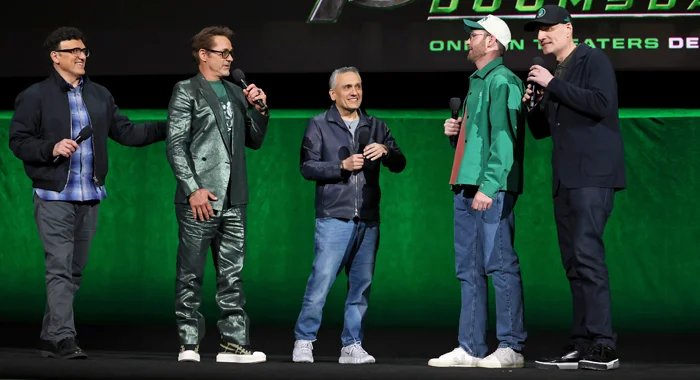
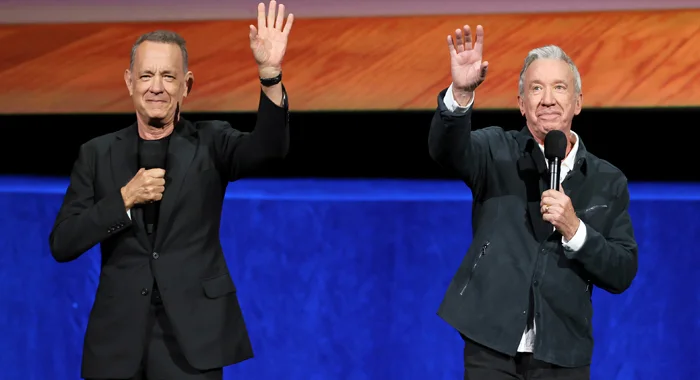
Paramount's Broad Bet: Genre Plays and Tech-Driven Experiences
Paramount Pictures, on the same day, demonstrated a similarly aggressive, if more genre-diverse, strategy. The studio is clearly thinking about how to draw audiences with distinct, often unconventional, offerings. Take *Street Fighter*, set for October 16. Legendary ring announcer Bruce Buffer’s introduction, telling the audience to "get your coins ready as we travel back to 1993," immediately set a nostalgic, arcade-era tone. But it's the casting that truly sells Paramount's approach here: David Dastmalchian as M. Bison, Callina Liang as Chun-Li, 50 Cent as Balrog, Roman Reigns as Akuma, Olivier Richters as Zangief, Andrew Schulz as Dan, Cody Rhodes as Guile, Noah Centineo as Ken, and Eric Andre as Don Sauvage. This isn't just a film; it’s an event featuring a bizarre, fascinating ensemble of wrestlers, comedians, rappers, and actors. This eclectic mix strongly suggests a film embracing the wild, over-the-top energy of its source material, promising a spectacle that demands a communal, big-screen viewing.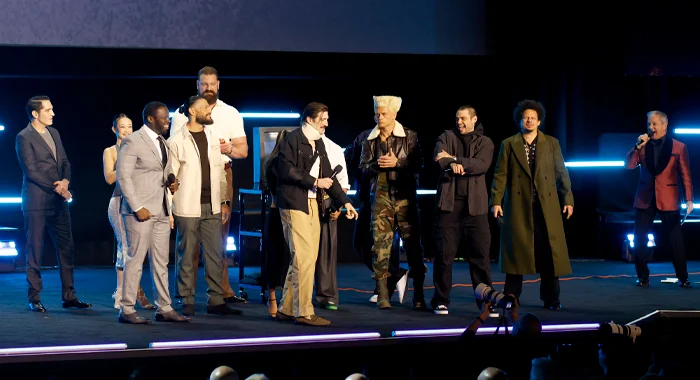

The Theatrical Reassertion: What It Means
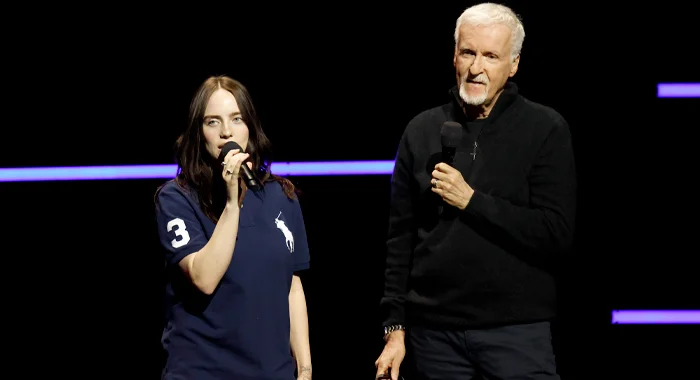
What emerged from CinemaCon 2026 isn't just a list of movies; it's a thesis statement on the future of cinema. Both Disney and Paramount are aggressively reaffirming the theatrical experience, not just as a distribution channel, but as a unique and indispensable event. They're doing this by: * **Leveraging Legacy for Evolution:** Using established, powerful IPs (*Avengers*, *Toy Story*, *Star Wars*, *Street Fighter*, *Jackass*, *Scary Movie*) not just for sequels, but to pivot, reset, or introduce new dimensions. The multiverse is Disney's reset button for the MCU; timely social commentary breathes new life into *Toy Story*. * **Innovating the "Event" Film:** Investing in advanced technology and unique presentation formats, like James Cameron’s camera work for Billie Eilish or Disney's "Infinity Vision," to deliver experiences truly unavailable at home. * **Targeting Distinct Audiences:** Offering a diverse slate that ranges from family-friendly blockbusters to edgy R-rated comedies, dance films, and horror adaptations, ensuring there's something to draw almost every demographic into a cinema seat. This isn't a defensive posture; it's an offensive one. The studios are betting that by making the theatrical experience bigger, bolder, more technologically immersive, and more thematically resonant, they can re-establish its pre-eminence. The thing worth watching here isn’t just whether these individual films succeed, but whether this concerted, multi-pronged strategy manages to shift the gravitational pull back to the big screen. It’s a fascinating, high-stakes moment for Hollywood, and CinemaCon 2026 provided an unfiltered look at how the industry plans to fight for its future.See Also: Day 1 | Day 2 | Day 3
CinemaCon 2026 runs from Sunday, April 12 to Thursday, April 16, with studio presentations taking place on Monday through Thursday. Here’s what the schedule currently looks like:
Monday, April 13: Angel, Sony Pictures Classics, STUDIOCANAL; Sony Pictures Entertainment
Tuesday, April 14: Neon; Warner Bros.
Wednesday, April 15: Universal Pictures and Focus Features; Amazon MGM Studios
Thursday, April 16: Paramount Pictures; Walt Disney Studios