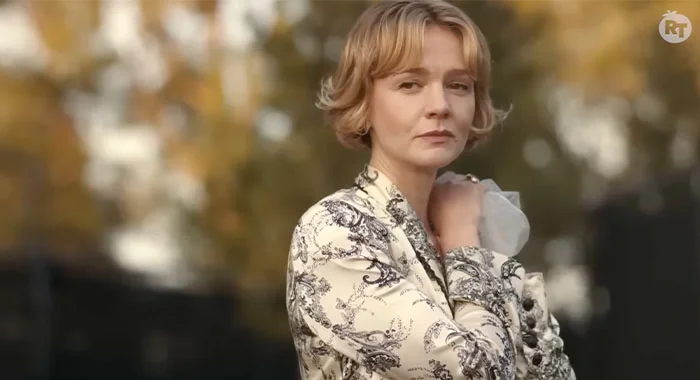
Beef Season 2: Initial Reviews Affirm Its Rewarding Continuation
·5 min read
Here's the thing about following up a breakout hit: the expectations are sky-high, and the comparisons are inevitable. When Lee Sung Jin's anthology Netflix drama, *Beef*, arrived, it captured lightning in a bottle. Now, with Season 2 dropping, critics are weighing in on whether the new installment lives up to that formidable legacy. The consensus is, predictably, a mixed bag – but largely in a way that still makes it worth watching.
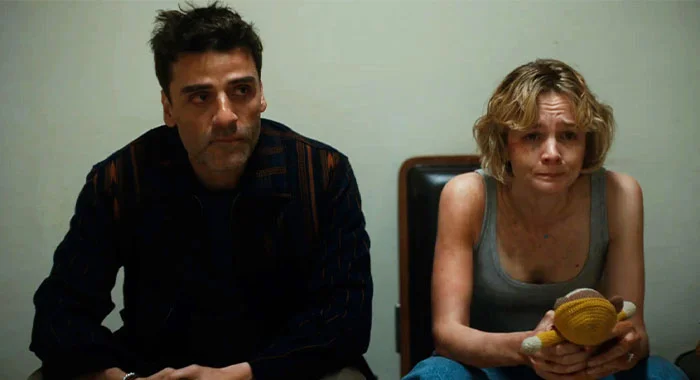
This time around, *Beef* goes anthology, shifting away from the original cast. We're introduced to a completely new narrative featuring a fresh ensemble of clashing couples. Headlining the season are Oscar Isaac, Carey Mulligan, Cailee Spaeny, and Charles Melton, all embroiled in drama at an exclusive country club. While the performances are getting widespread acclaim, the plot itself has drawn some critique for perhaps biting off more than it can chew. Fans should probably temper their expectations a bit; topping that first season was always going to be a monumental task.
The conversation around Beef: Season 2 is nuanced, reflecting both admiration for its ambition and some reservations about its execution.
Sizing Up the Sophomore Season
The lingering question for anyone who adored the first season is whether this new chapter measures up. Some critics are absolutely convinced it does. Kelly Lawler from USA Today, for instance, asserts it's "every bit the excruciating masterpiece the first season was," adding that "everything you hoped would come back to this series does." James Mottram at NME echoes this sentiment, finding it a "compelling look at ambition and avarice gone awry," describing the season as "another deliciously savage hunk of drama." Graeme Guttmann of Screen Rant praises its continued "electric unpredictability."
Yet, not everyone shares that level of enthusiasm. Nick Schager at The Daily Beast frames it as "a comic crime saga that demonstrates the difficulty of catching lightning in a bottle twice." Karina Adelgaard from Heaven of Horror expressed disappointment, though she attributes it more to the first season's brilliance than the second's failings. Sara Clements writing for Next Best Picture labels it "a bit of a disappointment" as a follow-up to "a cultural phenomenon." And a more pointed critique from Tyler Doster at AwardsWatch suggests that "the wait for the third season… doesn’t feel particularly worth it, the show feeling stagnant."
Plot Ambition and Narrative Structure
The new season appears to be swinging for the fences in terms of scale. Erik Anderson of AwardsWatch believes Season 2 is "even better…There’s just more, well, meat here." Jeremy Mathai at Slashfilm notes that while Season 1 reflected "everything we tend to worry over or take for granted," Season 2 "takes this to the next level." Graeme Guttmann views it as expanding into "a Grand American Story, a parable about the destructive force of capitalism." Allison Picurro of TV Guide even suggests that "in a bigger, more focused Season 2, that great show has finally revealed itself."
However, this increased scope isn't without its detractors. David Craig at Radio Times felt it "would have been nice to see some bigger swings taken this time around," implying a missed opportunity. More critically, Alison Herman for Variety argues this "expanded version of *Beef* has so many centers of gravity that the whole enterprise starts feeling adrift." There's a clear tension here between the desire for larger themes and the potential for narrative sprawl.
On the writing front, Lee Sung Jin continues to draw praise for tackling "marriage dynamics and class disparity" with elegance, according to Allison Picurro. Daniel Fienberg at The Hollywood Reporter highlights Jin's "big ideas to play with and trenchant aspects of contemporary American culture to pick apart," noting a story that "spins wildly and intentionally out of control." But this ambition can be a double-edged sword. Graeme Guttmann finds it "a lot of story" where the "sprawling narrative doesn’t always work in *Beef*‘s favor." James Jackson of The Times even called some "plot turns contrived," specifically mentioning "the introduction of an incompetent cosmetic surgeon." Nick Schager bluntly states, "Beef is never dull, but it’s not nearly as deep as it intends to be."
Tone, Humor, and Character Focus
When it comes to the show's signature tone, critics are noticing a shift. Karina Adelgaard perceives a "darker… just a sadder vibe" this season. Sara Clements observes that the "beef here is far less external," moving from the "reactionary fervor" of the first season to "a slow burn of sniffing around into others’ business." Yet, Jeremy Mathai still applauds *Beef*'s "preternatural control of tone, swinging confidently from acidic to emotional to darkly humorous at the drop of a hat."
The dark comedy element, a highlight of Season 1, also receives mixed reactions. Graeme Guttmann confirms that Lee "maintains Beef‘s acidic sense of humor," effectively "poking fun at both couples." Jeremy Mathai relishes the unpredictability, stating you "won’t know whether to recoil in disgust or laugh at the absurdity." However, Karina Adelgaard laments that it "doesn’t utilize the dark comedy edge nearly as much this time around," calling it "a real shame." This suggests a potential leaning into drama over its comedic roots for some.
As for the characters, *Beef* has never shied away from presenting deeply flawed individuals. Jeremy Mathai warns that "anyone who thinks we need likeable heroes…is likely in for a rude awakening here." Despite their extremes, Kelly Lawler believes Lee's characters "never stop being unmistakably human." James Jackson specifically highlights Carey Mulligan's performance as "brittle Lindsay," calling her "unlikeable, but…also compelling," particularly in her portrayal of marital doubts.
Ultimately, it seems *Beef* Season 2 remains a captivating, if at times uneven, watch. While the performances from its new lead quartet are uniformly praised, the expansive new plot occasionally struggles to maintain the razor-sharp focus that made its predecessor such an undeniable force. It's a worthy return, certainly, but whether it fully recreates that original, singular magic is still up for debate.Alright, let's talk about the second season of *Beef*. From the buzz, it's clear Netflix has another compelling, albeit divisive, entry on its hands with "Beef: Season 2," set to premiere on April 16. What's immediately striking is the critical consensus: while the show continues to deliver high-octane performances, especially from its new ensemble, there's a real question about whether audiences will actually *like* the characters they're watching.
The Double-Edged Sword of Unlikable Leads
Here's the thing: while critics are almost universally praising the acting, there's a strong undercurrent about the characters themselves. Pat Stacey at the Irish Independent pulls no punches, stating that the show’s inhabitants, "rich or poor, [are] so unlikeable leaves no one to root for." That’s a bold claim, and if true, it asks a lot of viewers. Can exceptional performances carry a narrative if the audience has no emotional anchor?
An A-List Ensemble Delivers, Mostly
Despite any issues with character appeal, the cast is proving to be the season's undeniable draw. Karina Adelgaard from Heaven of Horror simply calls the new cast "truly amazing," while Alistair Ryder at Looper.com anticipates "Four exceptional lead performances that will be among the year’s very best." The core quartet—Oscar Isaac, Carey Mulligan, Cailee Spaeny, and Charles Melton—is noted by Jeremy Mathai of Slashfilm as more than holding "up their end of the bargain." Alison Herman at Variety sums it up: the performances are "uniformly and unsurprisingly excellent…just professionals demonstrating why their success is so justified." They're not just watchable, as Karen Gordon from Original Cin notes; they "create a sense of what the characters are thinking—or not thinking—in some of the quieter moments."
However, there's a solitary voice of mild disappointment. David Craig at Radio Times finds the performances, while strong, "mostly resemble business-as-usual for these actors," which feels like a missed opportunity compared to the radical departures we saw from Steven Yeun and Ali Wong in the first season.
When it comes to individual standouts, Oscar Isaac seems to be the clear frontrunner. Allison Picurro of TV Guide describes him as "never-better," delivering a "knockout performance from beginning to end." Ryder at Looper.com adds that Isaac finally gets "the more deserving showcase, especially after years where it’s felt like Hollywood has had no idea what to do with him." Carey Mulligan also garners significant praise, with Erik Anderson of AwardsWatch calling her "truly exceptional here, doing some career-best work." Charles Melton is highlighted by Craig for his "impressive comic talent as the rather dim-witted Austin," and Cailee Spaeny, according to Ben Travers at IndieWire, provides "heartiest laughs and most moving revelations" through her balance of "ferocity and terror."
A Visually Striking Production
Beyond the acting, the show's aesthetic continues to impress. Erik Anderson again points to cinematographer James Laxton (known for *Moonlight*), who "spectacularly shot" the season, capable of lensing "raw intimacy as deftly as moments of surrealism." Director Lee Sung Jin, along with co-directors Jake Schreier and Kitao Sakurai, are credited by Graeme Guttmann of Screen Rant for maintaining "a sleek visual style that evolves as the series progresses." It's a show that knows how to "dazzle," not just tell a story well, as noted by Jeremy Mathai at Slashfilm.
The Finale: A Divergent Path
The ending of the season appears to be a major talking point, with critics divided on its success. Tyler Doster at AwardsWatch declares "the destination is well worth the journey," but the path there is certainly unconventional. Judy Berman at TIME Magazine praises Lee Sung Jin for not trying to replicate "Season 1’s harrowing masterpiece of a two-hander finale." Instead, the show "smartly escalates in a different direction," building to "a stylish, Korea-set climax that recalls the anticapitalist thrillers, like Bong’s *Parasite* and Park Chan-wook’s *No Other Choice*." Allison Picurro at TV Guide adds that the genre jumping feels "as surprising as it does inevitable." Alistair Ryder describes the finale as taking a "Coen Brothers-inspired direction."
And yet, not everyone is convinced. Nick Schager at The Daily Beast suggests that "perilous situations and a bit of aesthetic razzle-dazzle help distract attention away from the ho-humness of the narrative’s resolution." Sara Clements from Next Best Picture goes so far as to say, "If the entire show had maintained the energy of its final episode, it could have been great," implying the preceding episodes fell short.
What's Next for *Beef*?
The question of a third season is definitely on critics' minds, and opinion is split on how it should proceed. David Craig at Radio Times confidently states Lee Sung Jin "has proven without doubt that *Beef* works as an anthology," hoping for "more sizzling, bloody servings to come." Daniel Fienberg at The Hollywood Reporter echoes this, hoping Lee gets "the opportunity to show us what else *Beef* can be."
However, others caution against over-ambition. Graeme Guttmann at Screen Rant notes that "this sprawling narrative doesn’t always work in *Beef*'s favor." Both Alistair Ryder and Nick Schager suggest a return to the roots of the first season. Ryder argues that if the show goes "back to smaller-scale character drama next time, the series will be much stronger for it." Schager specifically recommends that any continuation "plumb personal and social ills by again tapping into the everyday rage and frustrations—and the minor conflicts that escalate into major crises—that were the lifeblood of its breakout debut."
In the end, what we have with "Beef: Season 2" is a series that, by most accounts, leans heavily on its exceptional acting talent and visual flair to deliver a compelling experience, even if the characters aren't exactly designed for audience affection. The bold genre shifts in the finale hint at an adventurous creative team, but whether that ambition consistently pays off, or if it overshadows the core human drama that made Season 1 so impactful, is something viewers will decide. If they greenlight a third season, the challenge for Lee Sung Jin will be finding the sweet spot between narrative grandeur and the intimate, relatable rage that defined its initial success.
Beef: Season 2 premieres on Netflix on April 16.
Find Something Fresh! Discover What to Watch, Read Reviews, Leave Ratings and Build Watchlists. Download the Rotten Tomatoes App.
 This time around, *Beef* goes anthology, shifting away from the original cast. We're introduced to a completely new narrative featuring a fresh ensemble of clashing couples. Headlining the season are Oscar Isaac, Carey Mulligan, Cailee Spaeny, and Charles Melton, all embroiled in drama at an exclusive country club. While the performances are getting widespread acclaim, the plot itself has drawn some critique for perhaps biting off more than it can chew. Fans should probably temper their expectations a bit; topping that first season was always going to be a monumental task.
The conversation around Beef: Season 2 is nuanced, reflecting both admiration for its ambition and some reservations about its execution.
This time around, *Beef* goes anthology, shifting away from the original cast. We're introduced to a completely new narrative featuring a fresh ensemble of clashing couples. Headlining the season are Oscar Isaac, Carey Mulligan, Cailee Spaeny, and Charles Melton, all embroiled in drama at an exclusive country club. While the performances are getting widespread acclaim, the plot itself has drawn some critique for perhaps biting off more than it can chew. Fans should probably temper their expectations a bit; topping that first season was always going to be a monumental task.
The conversation around Beef: Season 2 is nuanced, reflecting both admiration for its ambition and some reservations about its execution.
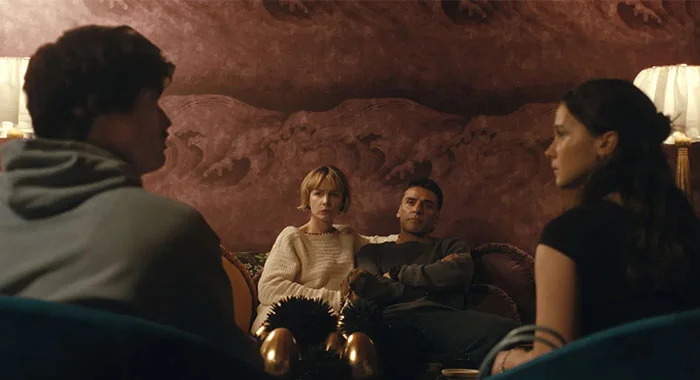 However, this increased scope isn't without its detractors. David Craig at Radio Times felt it "would have been nice to see some bigger swings taken this time around," implying a missed opportunity. More critically, Alison Herman for Variety argues this "expanded version of *Beef* has so many centers of gravity that the whole enterprise starts feeling adrift." There's a clear tension here between the desire for larger themes and the potential for narrative sprawl.
On the writing front, Lee Sung Jin continues to draw praise for tackling "marriage dynamics and class disparity" with elegance, according to Allison Picurro. Daniel Fienberg at The Hollywood Reporter highlights Jin's "big ideas to play with and trenchant aspects of contemporary American culture to pick apart," noting a story that "spins wildly and intentionally out of control." But this ambition can be a double-edged sword. Graeme Guttmann finds it "a lot of story" where the "sprawling narrative doesn’t always work in *Beef*‘s favor." James Jackson of The Times even called some "plot turns contrived," specifically mentioning "the introduction of an incompetent cosmetic surgeon." Nick Schager bluntly states, "Beef is never dull, but it’s not nearly as deep as it intends to be."
However, this increased scope isn't without its detractors. David Craig at Radio Times felt it "would have been nice to see some bigger swings taken this time around," implying a missed opportunity. More critically, Alison Herman for Variety argues this "expanded version of *Beef* has so many centers of gravity that the whole enterprise starts feeling adrift." There's a clear tension here between the desire for larger themes and the potential for narrative sprawl.
On the writing front, Lee Sung Jin continues to draw praise for tackling "marriage dynamics and class disparity" with elegance, according to Allison Picurro. Daniel Fienberg at The Hollywood Reporter highlights Jin's "big ideas to play with and trenchant aspects of contemporary American culture to pick apart," noting a story that "spins wildly and intentionally out of control." But this ambition can be a double-edged sword. Graeme Guttmann finds it "a lot of story" where the "sprawling narrative doesn’t always work in *Beef*‘s favor." James Jackson of The Times even called some "plot turns contrived," specifically mentioning "the introduction of an incompetent cosmetic surgeon." Nick Schager bluntly states, "Beef is never dull, but it’s not nearly as deep as it intends to be."
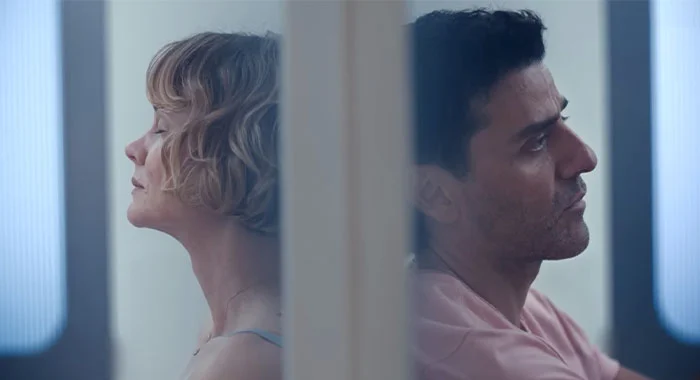 The dark comedy element, a highlight of Season 1, also receives mixed reactions. Graeme Guttmann confirms that Lee "maintains Beef‘s acidic sense of humor," effectively "poking fun at both couples." Jeremy Mathai relishes the unpredictability, stating you "won’t know whether to recoil in disgust or laugh at the absurdity." However, Karina Adelgaard laments that it "doesn’t utilize the dark comedy edge nearly as much this time around," calling it "a real shame." This suggests a potential leaning into drama over its comedic roots for some.
As for the characters, *Beef* has never shied away from presenting deeply flawed individuals. Jeremy Mathai warns that "anyone who thinks we need likeable heroes…is likely in for a rude awakening here." Despite their extremes, Kelly Lawler believes Lee's characters "never stop being unmistakably human." James Jackson specifically highlights Carey Mulligan's performance as "brittle Lindsay," calling her "unlikeable, but…also compelling," particularly in her portrayal of marital doubts.
The dark comedy element, a highlight of Season 1, also receives mixed reactions. Graeme Guttmann confirms that Lee "maintains Beef‘s acidic sense of humor," effectively "poking fun at both couples." Jeremy Mathai relishes the unpredictability, stating you "won’t know whether to recoil in disgust or laugh at the absurdity." However, Karina Adelgaard laments that it "doesn’t utilize the dark comedy edge nearly as much this time around," calling it "a real shame." This suggests a potential leaning into drama over its comedic roots for some.
As for the characters, *Beef* has never shied away from presenting deeply flawed individuals. Jeremy Mathai warns that "anyone who thinks we need likeable heroes…is likely in for a rude awakening here." Despite their extremes, Kelly Lawler believes Lee's characters "never stop being unmistakably human." James Jackson specifically highlights Carey Mulligan's performance as "brittle Lindsay," calling her "unlikeable, but…also compelling," particularly in her portrayal of marital doubts.
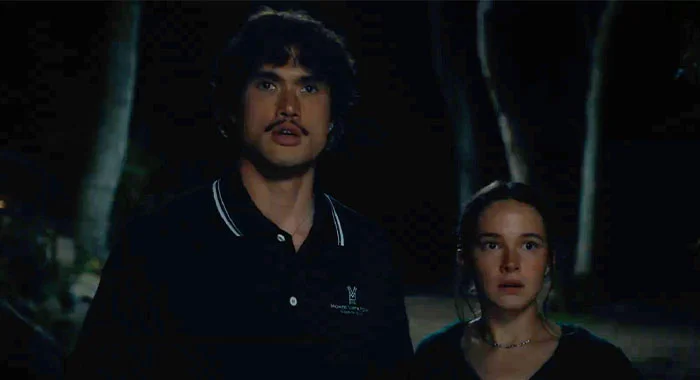 Ultimately, it seems *Beef* Season 2 remains a captivating, if at times uneven, watch. While the performances from its new lead quartet are uniformly praised, the expansive new plot occasionally struggles to maintain the razor-sharp focus that made its predecessor such an undeniable force. It's a worthy return, certainly, but whether it fully recreates that original, singular magic is still up for debate.Alright, let's talk about the second season of *Beef*. From the buzz, it's clear Netflix has another compelling, albeit divisive, entry on its hands with "Beef: Season 2," set to premiere on April 16. What's immediately striking is the critical consensus: while the show continues to deliver high-octane performances, especially from its new ensemble, there's a real question about whether audiences will actually *like* the characters they're watching.