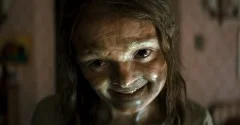
 The initial reviews for *Lee Cronin's The Mummy* have landed, and they paint a picture of a film determined to forge its own path. Forget your historical genre expectations; this isn't a retread of the Universal Monster era, nor is it linked to the Hammer productions of the 60s, the beloved Brendan Fraser adventures from the early 2000s, or even Tom Cruise’s misfire in 2017. What we have here is something different: a horror story centered on a journalist whose daughter vanishes in Egypt, only to reappear unsettlingly at their Albuquerque home eight years later. This is truly its own beast.
The critical consensus, if you can call it that, is somewhat divided. Some critics applaud its success in creating gory thrills and delivering distinct visual flair. Others, however, argue it leans too heavily on familiar horror tropes, ultimately failing to truly distinguish itself.
The initial reviews for *Lee Cronin's The Mummy* have landed, and they paint a picture of a film determined to forge its own path. Forget your historical genre expectations; this isn't a retread of the Universal Monster era, nor is it linked to the Hammer productions of the 60s, the beloved Brendan Fraser adventures from the early 2000s, or even Tom Cruise’s misfire in 2017. What we have here is something different: a horror story centered on a journalist whose daughter vanishes in Egypt, only to reappear unsettlingly at their Albuquerque home eight years later. This is truly its own beast.
The critical consensus, if you can call it that, is somewhat divided. Some critics applaud its success in creating gory thrills and delivering distinct visual flair. Others, however, argue it leans too heavily on familiar horror tropes, ultimately failing to truly distinguish itself.
A Fresh Take on an Ancient Name
What's immediately clear is that Lee Cronin, both as writer and director, isn't interested in continuity or homage. This *Mummy* is explicitly designed to distance itself from prior incarnations. "There is a mummy here. There are bandages. There is a sarcophagus… But nobody has to fake being unable to evade a creature that moves at the pace of molasses down a gentle slope," notes Donald Clarke of the Irish Times, highlighting the shift in monster dynamics. Linda Marric from HeyUGuys states that the film "makes no attempt to build on what came before." William Bibbiani at TheWrap goes further, suggesting Cronin treats the mummy elements "like window dressing." Radheyan Simonpillai of Globe and Mail describes an "Imhotep-free version" that only connects to the traditional mythology through "an Egyptian tomb, bandages and an ancient curse." It's almost as if the title is more of a thematic touchstone than a direct lineage. David Jenkins writing for Little White Lies believes the connection to mummies and their ancient mythos is "superficial at best." Alonso Duralde, for The Film Verdict, confirms this, noting the film "veers sharply away from the legendary Universal Monsters take on Egyptian death practices."Drawing From Modern Horror's Deep Bench
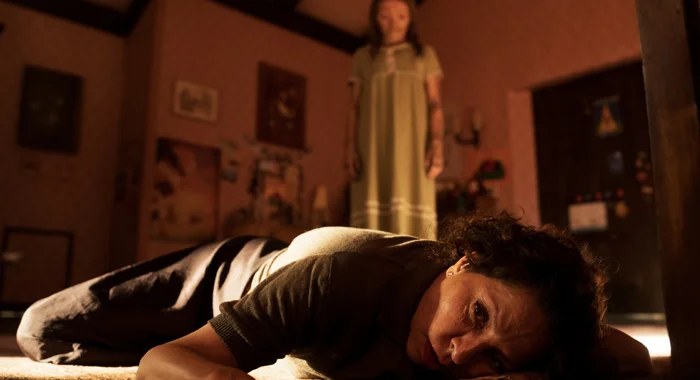
If this *Mummy* isn’t beholden to its namesakes, where does it find its inspiration? The critical consensus points overwhelmingly toward a specific corner of contemporary horror. David Rooney from Hollywood Reporter sums it up concisely: "Think *The Exorcist* meets *Hereditary* and you’re on the right track." That *Exorcist* comparison comes up repeatedly. Marric also highlights its debt to "its depiction of a child overtaken by something beyond comprehension," alongside "The Conjuring films, in its measured pacing and tonal discipline." Donald Clarke finds "endless reminders here of Linda Blair in *The Exorcist*," noting the film's "borderline-dubious use of our unease at decay and disease." Robbie Collin of the Daily Telegraph agrees, stating it "owes far more to The Exorcist and the Poltergeist films than to anything Boris Karloff or Lon Chaney Jr lurched through." Simonpillai even suggests Cronin "made a mess of an *Exorcist* movie that also crams in bits from *Don’t Look Now*, *Hereditary* and *The Evil Dead*." It’s not just other directors Cronin seems to be channeling. Bibbiani points out the uncanny similarity to Cronin's previous film, *Evil Dead Rise*, observing, "Both are about families ripped apart — literally and figuratively — after a loved one gets possessed by a demon. And both films are gross as hell."Gore and Genuine Fear
So, is *Lee Cronin's The Mummy* actually scary, or just a gross-out fest? The critics are split, but there's a strong argument for both. "The bottom line is: *Lee Cronin’s The Mummy* is, first and foremost, a scary movie — and it’s scary, scary, scary," insists William Bibbiani. Robbie Collin shares this sentiment, declaring, "It’s been a while since a horror film came along that left you genuinely fearful for the spiritual wellbeing of all involved." And yet, some find the scares fall flat. Alonso Duralde writes that if the film "were scary, all would be forgiven, but we’re left with a bunch of cheesy jolts and a vulgar array of physical assaults, most of them aimed at young girls and old women." On the gore front, however, there’s little disagreement. Cronin brings his signature style. Bibbiani notes his "uncanny knack for human mutilation," which is "practically a requirement" for "gross-out horror movies." Donald Clarke suggests that those who found Leigh Whannell’s *Wolf Man* "a little too muted will have no such complaint with Cronin’s shameless efforts here to test the audience’s capacity for recreational revulsion." Collin describes it as "crossing the line from unsettling to punishing," suggesting "a makeshift sick bag may be required." Simonpillai simply calls Cronin "a purveyor of gore – he finds oh so many ways to make us squirm, not in terror but disgust." While some appreciate the intensity, Duralde found the "onslaught of cracking bones, skin peeling, and teeth removal gets tiresome fast."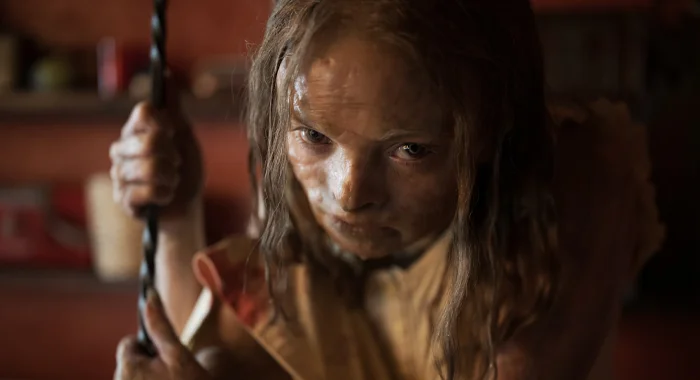
The Narrative Challenges
While the film delivers on visuals and visceral horror, the story itself seems to be a sticking point for many. Bibbiani finds that "Cronin has the emotional heart of his film down pat, but he can’t get a handle on his plot." He points out that while a simple plot works for *Evil Dead Rise*, this *Mummy* is "a plot-heavy mystery with tons of exposition," which becomes an issue. Linda Marric speaks to the pacing, noting it "asks for patience," and the "horror architecture is familiar enough that the joins occasionally show." David Rooney echoes this, suggesting Cronin’s "skill at whipping up a crescendo of horrors helps distract from a plot with too little connective thread between the big showstoppers." Simon Abrams from AV Club is less forgiving, arguing that what "really sinks *Lee Cronin’s The Mummy* is its creators’ heedless insistence on flooding viewers with the ridiculous, logic-frying plot twists." Jenkins goes further, identifying a missing "very basic sense of where the characters are in the story and how they interact with one another."Performances and Visuals Hit Their Mark
Despite the narrative wobbles, the acting and overall visual aesthetic appear to be strong points. Donald Clarke heaps praise on the cast: "excellent acting right down the dramatis personae. Reynor has heroic genes. Costa worries with majesty. And young Natalie Grace deserves huge praise for connecting with such blistering force through wads of restrictive make-up and prosthetics." Marric reinforces this, stating that Jack Reynor and Veronica Falcón (referred to as "Costa") "ground the film emotionally, giving Charlie and Larissa a believable sense of parental desperation that keeps the supernatural elements tethered to something human." May Calamawy also receives specific mention from Robbie Collin, who calls her "particularly good as the stubborn Cairo detective tracing Katie’s captors." Alonso Duralde, however, found Reynor's constant startled stare "loses its potency before long," despite praising Falcón and Calamawy.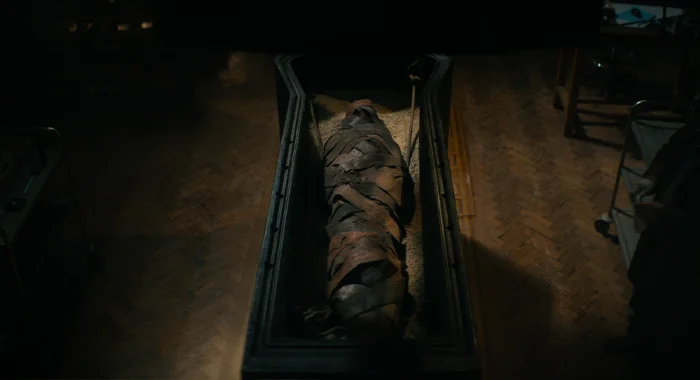 Visually, the film appears to be a success. Cinematographer Dave Garbett, a collaborator from *Evil Dead Rise*, is recognized for his work. Marric notes Garbett "shoots in deep shadow and deliberate eeriness," making the New Mexico setting feel "less like a backdrop than a condition." Rooney highlights their combined efforts, stating the pairing "brought rich, grungy textures, frantic movement, uneasy angles and disorienting split diopter shots to *Evil Dead Rise* [and] pays off with similar visual intensity here." Simonpillai sees an "appealing enough film grammar... with fun shot choices and clever edits," suggesting a clear "personal stamp" from the filmmaker. Kevin Maher of The Times (UK) simply states, "It looks great, and Cronin is a gifted stylist."
The Unseen Soundtrack
Finally, the film's score, by Stephen McKeon, contributes to the unsettling atmosphere. Simon Abrams describes *The Mummy*'s "throbbing, heavily-foregrounded soundtrack" as something that "might get under your skin anyway, especially whenever characters are listening to something loud and inexplicable happening in a nearby room, just out of view." Linda Marric praises McKeon’s score for working "without announcing itself, tightening the atmosphere in the quieter stretches rather than filling them." Ultimately, this iteration of *The Mummy* aims for a modern, visceral horror experience, largely shedding its classic predecessors in favor of a contemporary stylistic approach. Whether it truly succeeds in carving out its own legacy is still up for debate.The early word is out for **Lee Cronin’s The Mummy**, and honestly, it’s a pretty mixed bag, leaning toward disappointing. We’ve seen these critical reactions trickle in, and if you were hoping for a fresh take on a classic monster, you might want to temper expectations. The overriding sentiment? It’s a film that struggles to connect beyond its jump scares, often relying on familiar tropes without much new to say.A Shallow Scream: Where Are the Stakes?
One consistent thread in the initial reviews points to a fundamental lack of depth. Radheyan Simonpillai at the Globe and Mail put it succinctly: "What’s missing between every moment that has us clawing at arm rests – like a pedicure scene that goes hideously wrong – are emotional stakes." That's a pretty damning assessment for any film, especially horror, which often thrives on making us care about who lives or dies. William Bibbiani from TheWrap echoes this, suggesting the movie manages to deliver those visceral jolts but little else. "This movie makes you wince every couple of minutes," he writes. "That’s enough to recommend a horror movie. It’s just not enough to make it a great one, with or without the mummies." Here's the thing: "enough to recommend" isn't exactly high praise. It tells you the film hits the minimum requirement for its genre without aspiring to more.Pacing Problems and Predictable Terrors
Beyond the emotional void, critics highlight issues with the film's construction. Linda Marric at HeyUGuys finds the pacing drags and the genre mechanics transparent. "The pacing asks for patience, and the horror architecture is familiar enough that the joins occasionally show," she notes. Adding to that, "The nods to its influences can feel a little on-the-nose." This isn't just about familiarity; it implies a lack of subtlety, which can drain tension faster than a leaky sarcophagus. Simon Abrams at AV Club further dissects the narrative's disjointed nature. He criticizes how "Cronin’s movie gracelessly piles on new ideas and images with each new scene, while never effectively building up to the next big jolt." Abrams doesn't pull punches, concluding that "Most of the movie’s standout moments have no real momentum and are visually dull to boot—but hey, there’s plenty of blood, pus, and barf." This suggests a film that substitutes genuine suspense for gross-out moments, a common pitfall.Clichés and Gore: A Foundation Built on Familiarity
Mark Kennedy of the Associated Press rounds out the picture by detailing the film's heavy reliance on horror clichés. "Cronin leans into all the horror cliches — storms, dollhouses, flickering lights, muttered spells, whacked-out cults, bathtubs filled with rotting water, skittering insects and random coyotes — to establish a staid and eerie foundation, only to go over-the-top gorefest at the end." That's a laundry list of tropes. While familiarity can offer comfort in horror, an over-reliance without fresh execution just feels tired. The shift to a "gorefest" ending, after establishing an "eerie foundation," also hints at a tonal inconsistency or a failure to trust the initial mood. What this all means is Lee Cronin's take on *The Mummy* likely won't redefine the horror genre or the classic monster. It sounds like a film that offers surface-level frights and plenty of gruesome visuals, but without the narrative cohesion or emotional resonance to make it truly memorable. If you're heading to theaters on April 17, 2026, you'll probably get some jump scares and a few cringe-worthy moments. Just don't expect it to linger with you long after the credits roll. For a taste of what's coming, you can check out the film's Rotten Tomatoes page for more aggregated reactions. And here's the trailer to give you a sense of the visuals:Thumbnail image by ©Warner Bros. Pictures
Find Something Fresh! Discover What to Watch, Read Reviews, Leave Ratings and Build Watchlists. Download the Rotten Tomatoes App.