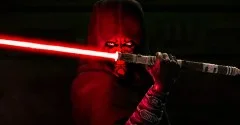
For a franchise that’s often struggled to find consistent footing in its live-action television offerings, the critical reception for Lucasfilm’s latest animated venture, Star Wars: Maul – Shadow Lord, lands like a seismic charge. Early reviews suggest this isn’t just another competent entry; it's a series that’s being hailed as a new benchmark for animated storytelling within the vast galaxy far, far away, potentially even redefining what a "best in franchise" *Star Wars* show can be.
There's an immediate sense that Lucasfilm Animation has hit a stride here, delivering a first season that many critics are calling among the most enjoyable and strongest *Star Wars* TV series to date. This isn't faint praise; it's a direct challenge to the established order, hinting at a creative maturity that pushes the technical and narrative capabilities of animated *Star Wars* forward.
Maul's Enduring Gravitas Takes Center Stage
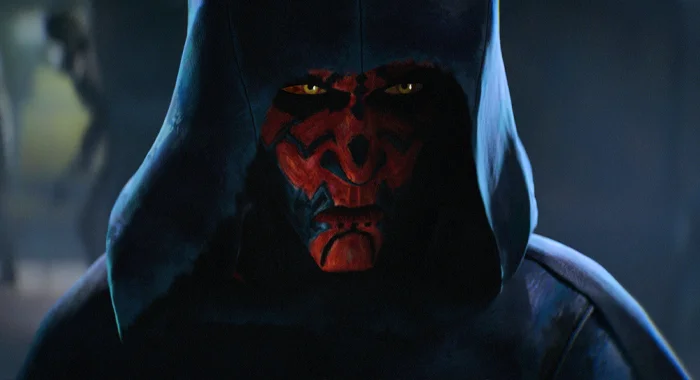
The decision to center a series on Maul, the iconic, perpetually wronged Sith Lord, appears to be paying massive dividends. Critics are quick to highlight how Shadow Lord doesn't just re-tread familiar ground, but "deepens Maul," exploring his "wrath and surprising vulnerability." Set in the turbulent aftermath of the Clone Wars, the show follows Maul as he tries to reconstruct his criminal empire on a world seemingly untouched by the burgeoning Empire. This period, ripe with power vacuums and moral ambiguity, proves to be fertile ground for storytelling.
The praise for Sam Witwer's vocal performance as Maul is almost universal, described as "brilliant" and "perfect." It’s clear that Witwer, who has voiced the character across multiple *Star Wars* properties, brings a gravitas and nuanced understanding that anchors the series. The narrative isn't just a vehicle for action; it's a character study, a "dark, gritty, and grounded story that gives Maul all the time he needs to shine," as one reviewer put it. This kind of dedicated focus allows for a compelling exploration of one of *Star Wars’s* most intriguing antagonists, an opportunity to delve into his motivations and the sheer force of his will beyond simple villainy. It’s a compelling argument for why certain characters deserve their own narrative space.
A New Visual Benchmark for Lucasfilm Animation
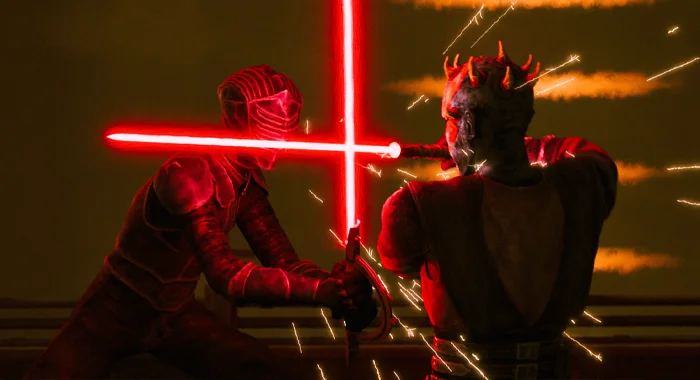
When it comes to the sheer visual artistry, the consensus is almost breathtakingly positive. "Star Wars animation has never looked better," declares Inverse, a sentiment echoed by many who describe the series as "visually striking" and a "true demonstration of how beautiful *Star Wars* animation can be." The animation isn't just pretty; it's lauded as the "standout aspect... immediately presented from the very first frame."
This level of visual fidelity and stylistic ambition isn't merely aesthetic; it's foundational to the storytelling. "A visually striking series that deepens Maul while proving once again why Star Wars animation continues to lead in storytelling," noted Nagier Chambers. This suggests a synergy where the enhanced visuals don't just dress up the narrative but actively contribute to its depth and impact. The action sequences, in particular, are getting significant attention: "most action-packed series yet. With epic saber fights, massive laser battles, and crushing vehicle chases through the highways and byways of Janix." This speaks to a maturity in Lucasfilm's animation pipeline and creative direction, pushing the boundaries of what episodic animation can achieve within a major franchise.
That said, it’s worth acknowledging a lone dissenting voice among the effusive praise for the animation. One critic suggested the "series has slowly devolved into the very thing it has spent years kicking down." While an outlier, this kind of divergence in opinion often points to stylistic choices that might not land with everyone, or perhaps a preference for earlier animation aesthetics. However, the overwhelming majority points to a clear step forward.
Narrative Depth Meets Accessibility
One of the more interesting takeaways from initial impressions is the series' ability to balance narrative depth with surprising accessibility. While it offers a "deep dive into this era of *Star Wars*," it also manages to deliver a "pretty straightforward, simple, contained story" that doesn't "require knowing a lot of lore that’s not present in the films." This is a significant achievement for a franchise often criticized for its high barrier to entry for newcomers.
It's a "well thought-out and rich setting" that blends threads of "revenge, loyalty, revolution and punchy comedic dialogue," creating a "fan’s delight" without alienating those less steeped in the extended universe. This focused approach, allowing Maul to operate on the new world of Janix, complete with "interesting and exciting new characters," enables a narrative that feels fresh yet deeply embedded in the *Star Wars* ethos. It suggests a creative strategy that prioritizes compelling, self-contained arcs over relentless tie-ins to broader canon, a smart move that broadens appeal.
The Path Forward: What This Means for Lucasfilm
While the praise is strong, a few critics offered tempered notes. Some felt the series "takes too long to develop before the plot heats up," while others, like Variety, acknowledged it "can capably move the *Clone Wars* story forward, but it’s not yet ready to serve as a *Star Wars* standard-bearer on its own," describing it as a "solid start—just one that leaves me with a little trepidation and concern." These aren't damning criticisms, but rather highlight the extremely high bar the show sets for itself and the expectations it now has to meet in future seasons.
The overall picture, however, is clear: Star Wars: Maul – Shadow Lord, now streaming on Disney+, represents a significant triumph for Lucasfilm Animation. It demonstrates that the animated arm of the franchise isn't just a supplementary medium but a leading one, capable of delivering some of the most compelling narratives and visually stunning experiences. For industry professionals eyeing the trajectory of streaming content and the evolution of major IP, this series is a crucial data point. It showcases how dedicated character exploration, coupled with top-tier animation and accessible storytelling, can not only win over critics but potentially invigorate a franchise. The challenge now is whether Lucasfilm can maintain this elevated standard and leverage this critical success to further push creative boundaries across all its *Star Wars* projects.