The Unlikely Intersection: When a Skipper Met a Renegade in the Old West
Hollywood's narrative often focuses on the obvious, the headline-grabbing, the stars whose arcs are perfectly aligned. But dig a little deeper, and you find moments of unexpected confluence that, in retrospect, tell a much richer story about the industry's currents and crosscurrents. One such moment came in the late 1960s, a collision between a beloved television icon and a rising cinematic rebel, set against the gritty backdrop of a pivotal Western. It's the story of Alan Hale Jr., forever enshrined as Captain Jonas Grumby from Gilligan's Island, and Clint Eastwood, then on the cusp of becoming a genuine American superstar, sharing the screen in 1968's Hang 'Em High.
The instinct might be to see this as a mere footnote, a "Where Are They Now?" moment for Hale. But that misses the point. Hale's presence in Hang 'Em High underscores the immense gamble Eastwood took, a decision that not only shaped his career but established a blueprint for actor-led creative control. Hale, the friendly Skipper, found himself a witness, and indeed an antagonist, to one of the most significant career pivots in modern Hollywood history.
Clint Eastwood's High Stakes Gamble with Malpaso
By the late 1960s, Clint Eastwood wasn't exactly unknown. He'd become a sensation in Europe thanks to Sergio Leone's "Dollars" trilogy, a series that fundamentally rewrote the rules for Westerns. Yet, in the United States, that stardom was taking its sweet time to materialize. Hollywood's gatekeepers, it seems, weren't quite ready to embrace a new kind of cowboy. Eastwood himself articulated this challenge in "Conversations with Clint: Paul Nelson's Lost Interviews with Clint Eastwood, 1979-1983," noting, "Even after [the 'Dollars' films] came to America and did well, still I wasn't getting a tremendous amount of action. I wasn't getting the action that the trade magazine stars were getting."
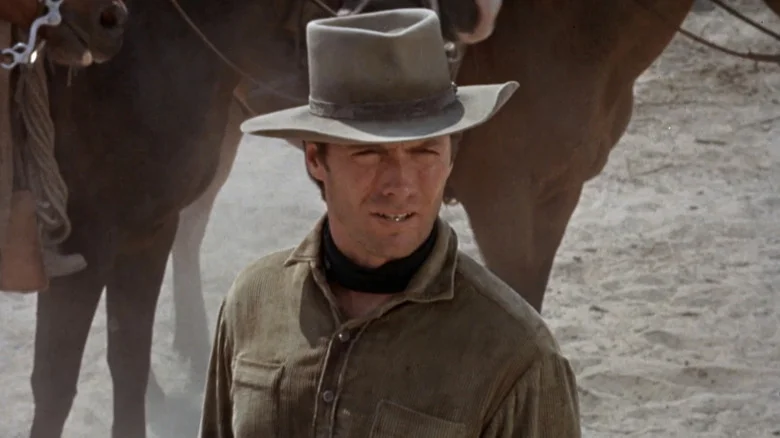
This put Eastwood at a crossroads. He faced pressure to accept a role in a more conventional, perhaps even "safe," Western like Mackenna's Gold, which featured established stars Gregory Peck and Omar Sharif. Instead, Eastwood made a gutsy move. He chose Hang 'Em High, a film that would not only be his first American feature but also the inaugural project for his newly formed Malpaso production company. This wasn't just an acting choice; it was a declaration of independence, a strategic play for creative autonomy in an industry resistant to outsiders. That's a decision that echoes through every major star-driven production company we see today. The gamble paid off: Hang 'Em High became a commercial success, especially after distributor United Artists wisely bundled its showings with the popular "Dollars" trilogy.
Alan Hale Jr.'s Unexpected Turn as an Accused Vigilante
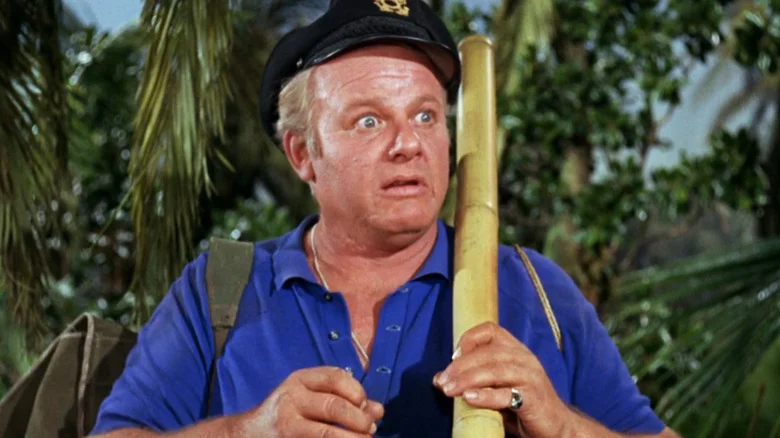
While Eastwood was forging a new path, Alan Hale Jr. was navigating his own post-iconic role reality. Before Gilligan's Island made him a household name, Hale Jr. was a prolific character actor with a significant history in Westerns, going all the way back to the 1940s. He'd worked with figures like Kirk Douglas in 1952's The Big Trees and even played the Sundance Kid in 1956's The Three Outlaws. He appeared alongside Audie Murphy in Destry and Robert Wagner in The True Story of Jesse James. There was even that anecdote about a Fox executive offering a hefty $25,000 to Gregory Peck to shave his mustache for 1950's The Gunfighter, a film where Hale Jr. also had an uncredited role.
So, his presence in a Western wasn't out of character. What's striking is the context. By the time Hang 'Em High began production, Hale Jr. had wrapped his high-profile gig as The Skipper, a role he'd embrace for decades across the original series, three follow-up films, and two animated spin-offs. That's a powerful association, and for many actors, escaping such typecasting proves nearly impossible. In Hang 'Em High, he shed the friendly, bumbling persona of Captain Jonas Grumby to play Matt Stone, one of the vigilantes who wrongly lynches Eastwood's character, Jed Cooper. It was a stark departure, placing him squarely in a darker, more vengeful narrative.
Justice Served: The Silent Confrontation
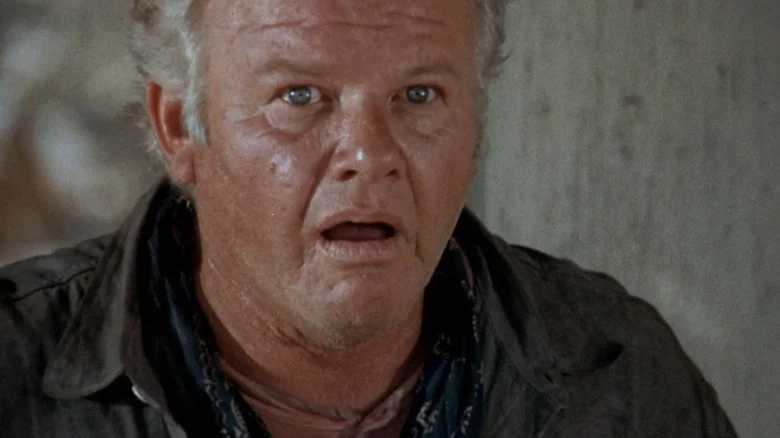
The film's plot sees Jed Cooper, miraculously surviving his lynching, become a U.S. Marshal and systematically hunt down those responsible. This quest for justice eventually brings him to the town of Red Creek, where he finds Matt Stone, now working as a farrier. Their confrontation is a masterclass in unspoken tension. Stone immediately recognizes Cooper, the man he tried to hang. Cooper, now armed with the law, holds Stone at gunpoint and escorts him into custody. Not a single word passes between them.
That silence speaks volumes. It's the only time Eastwood and Hale Jr. ever shared the screen, a fleeting but impactful encounter that captured Eastwood's ascendance and Hale Jr.'s ability to shed his comedic skin, even if just for a moment. This scene, more than just advancing the plot, feels like a symbolic handover, a passing of the torch from one era of Hollywood to the next, even if unintentional.
The Persistent Battle for Recognition
Even with the success of Hang 'Em High, Eastwood found that Hollywood's resistance wasn't easily overcome. He recounted this struggle in "Conversations with Clint," observing, "I came out of European-produced films and some people didn't accept it. The Hollywood community didn't accept it, the press didn't accept it — with very few exceptions anyway. Finally I started doing a few American films, and even then they got used to not accepting it, because I wasn't the prediction."
That quote hits hard, doesn't it? It speaks to the industry's often rigid expectations and its difficulty embracing talent that doesn't fit a predetermined mold. Hang 'Em High, for all its box office success, was just the first step in a longer battle for Eastwood to earn the respect and creative freedom he sought. His Malpaso company, born from that initial gamble, became the vehicle for that fight, eventually paving the way for his iconic directorial career.
What this curious cinematic crossover really highlights is the unpredictable nature of an actor's journey and the hidden mechanics of a shifting industry. While Alan Hale Jr. found comfort and legacy in the repetitive charm of the Skipper, Clint Eastwood used Hang 'Em High to blast open new possibilities. It's a reminder that even the most seemingly disparate careers can intertwine at critical junctures, each leaving an indelible, if sometimes overlooked, mark on the other.