The Uncomfortable Truth of War: Why Clint Eastwood's "Letters From Iwo Jima" Still Challenges Audiences
There are some films that, despite critical acclaim and a director's passionate intent, just don't find their audience, at least not in the way their creators hoped. Clint Eastwood's 2006 World War II drama, "Letters from Iwo Jima," is a prime example. More than a decade after its release, Eastwood himself expressed a lasting disappointment that American audiences largely bypassed his singular effort to portray the Battle of Iwo Jima from the Japanese perspective. It's a fascinating and telling episode in modern filmmaking, revealing as much about audience appetite for challenging historical narratives as it does about directorial ambition.
Eastwood's decision to tackle the Battle of Iwo Jima through two distinct lenses was, by any measure, an ambitious undertaking. In 2006, he simultaneously directed "Flags of Our Fathers," which chronicled the American experience, and "Letters from Iwo Jima," told entirely in Japanese from the viewpoint of the Imperial Japanese Army. The battle itself, fought in February and March of 1945, was a brutal affair, costing nearly 7,000 US Marines and 18,000 Japanese soldiers their lives. "Flags of Our Fathers" landed with a respectable $33.6 million at the domestic box office, yet "Letters from Iwo Jima" managed less than half that, pulling in only $13.7 million in the United States. And yet, this isn't simply a story of a film underperforming; it's a story of a director intentionally making audiences uncomfortable, and those audiences largely opting out.

Eastwood's Intent: Empathy, Not Jingoism
The conventional wisdom might suggest that a film told in a foreign language simply wouldn't resonate with mainstream American viewers. But that reading misses a key point about Eastwood's specific disappointment. In a 2011 interview with GQ, while promoting "J. Edgar," he reflected on "Letters from Iwo Jima," which had been made on a comparatively modest $12 million budget. "In Japan it did sensationally," he noted, referring to its impressive $68 million overseas gross, with Japan being its strongest market. "But I wish more people had seen it here — just for the understanding of how war affects other societies."
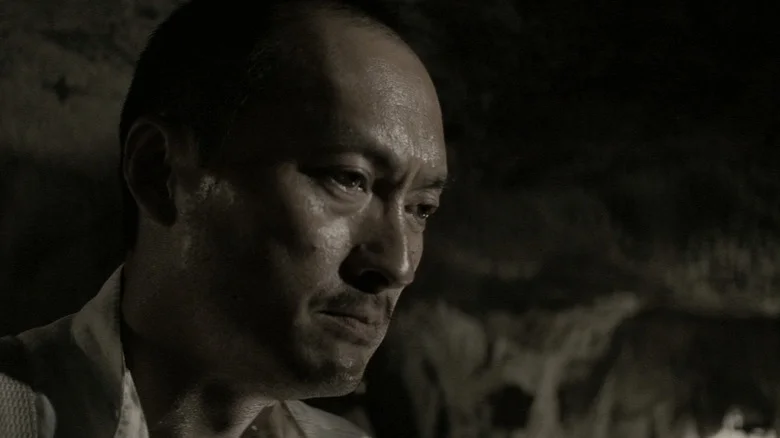
This wasn't just about box office numbers; it was about a missed opportunity for cultural understanding. Eastwood, often associated with his conservative political leanings and a certain brand of American rugged individualism, made a deliberate choice to craft a narrative that went against the grain of typical war portrayals. "Letters from Iwo Jima" offered an intimate portrait of Japanese soldiers, led by General Tadamichi Kuribayashi (played by Ken Watanabe), depicting their resilience and humanity in the face of inevitable defeat. The film consciously avoids the simplistic good-vs-evil dichotomy that often characterizes war movies, opting instead for a portrayal of universal trauma.
The critical reception largely affirmed Eastwood's artistic intentions. Many critics lauded "Letters from Iwo Jima" for its unflinching look at the horrors of war and its nuanced characterizations, often calling it Eastwood's best war film. It was designed to make audiences uncomfortable, to challenge their preconceived notions, and to show that war's devastating impact is felt on all sides. This stands in stark contrast to his later film, "American Sniper," which, while a massive commercial success, faced criticism for a more simplistic, and some argued, jingoistic depiction of conflict.
The Challenge of Heroism and Escapism
Eastwood's reflections on the film's domestic reception cut to the core of a persistent challenge in cinema. He articulated the concept of "a constant heroism in being sent someplace and told you're never coming back," an idea he associated with the Japanese soldiers in the film. His candid assessment? "You couldn't sell that to too many Americans."
This statement isn't necessarily a criticism of American audiences, but rather an observation about the kinds of narratives that historically find widespread resonance. There's a powerful draw to stories of unambiguous heroism, clear victories, and the triumph of one's own side. An "uncomfortable" depiction of the enemy's suffering, devoid of easy moral judgments, can be a harder sell. It requires a different kind of engagement, an active willingness to step outside one's own cultural framework.
Moreover, Eastwood linked the film's underperformance to a burgeoning trend he observed at the time: the rise of comic book movies and the Marvel Cinematic Universe. "I had no delusions that the film was going to be any more successful than it was," he told GQ. "But I would just love audiences to embrace more things than just comics." His comment highlights a tension between cinema as a vehicle for escapist entertainment and its potential as a tool for deeper, often uncomfortable, social and historical commentary. In an increasingly fragmented media environment, films that demand emotional labor from their viewers often struggle against those offering more immediate gratification.
The Enduring Relevance of an Unseen Masterpiece
"Letters from Iwo Jima" represents a singular moment in Eastwood's lengthy career, a genuine artistic swing at empathy and a critical examination of conflict that transcends nationalistic boundaries. It's an important reminder that some of the most profound stories aren't always the easiest to consume, nor are they necessarily the most profitable. The film's relative obscurity among American audiences, despite its quality and unique perspective, underscores a broader cultural reluctance to fully engage with the complexities and shared human cost of historical conflicts.
For those of us working in media, or simply consuming it, the story of "Letters from Iwo Jima" isn't just about a film that didn't hit big at the box office. It's a prompt to consider what stories we seek out, what perspectives we're willing to embrace, and whether our collective appetite for challenging narratives is truly expanding. Eastwood wanted to offer a window into how war affects "other societies," and in doing so, offered a profound statement on the shared human condition. That vision, even if largely unheeded by its initial target audience, remains just as vital today.