The way a story ends can redefine its entire legacy. For television series, especially those that capture the cultural zeitgeist, the final episode carries an immense burden. It’s the last word, the last impression, the moment when every character arc, every mystery, every emotional investment either pays off or crashes and burns. And when it’s the latter, the lingering bad taste can genuinely sour years of goodwill.
That's the core idea behind Sam Stone's latest piece for SlashFilm, titled "10 Worst TV Show Finales Of All Time, Ranked." Published on April 21, 2026, the feature (a substantial 2300-word analysis across 11 slides) dives into those particularly painful send-offs that, despite a show's popularity or critical acclaim, managed to derail their own carefully built narratives. Stone isn't just looking for shows that were bad throughout; he's zeroing in on instances where even beloved series stumbled dramatically at the finish line. It's a common frustration among viewers, and Stone aims to highlight the most egregious creative misfires, acknowledging that while some finales have their staunch defenders, they largely represent a "huge swing and a miss."
NBC
Stone kicks off the list with some truly infamous examples, illustrating how diverse the forms of narrative failure can be.
## An Explosive Act of Defiance: *Little House on the Prairie*
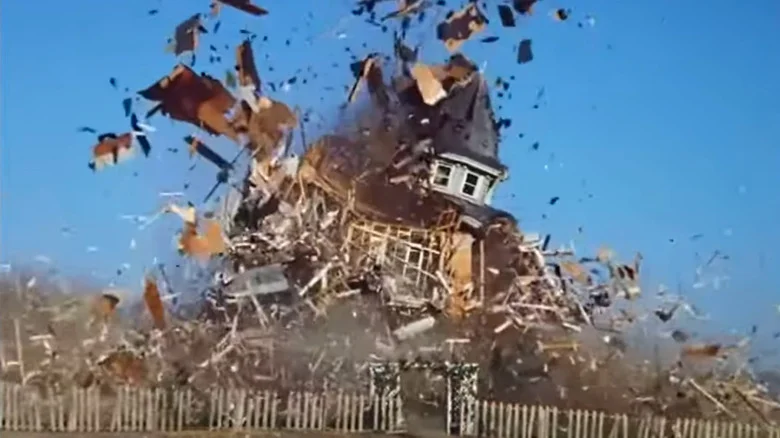
Coming in at number 10, "Little House on the Prairie" offers a particularly striking case. For nine seasons, this wholesome period drama, centered on the Ingalls family's life in 19th-century Minnesota's Walnut Grove, built a legacy of community and perseverance. Its finale, "Hello and Goodbye," written by series star and executive producer Michael Landon, takes an extraordinary turn. When a land baron, Nathan Lassiter, seizes the town, and the courts rule in his favor with military backing, the community decides on an act of collective destruction: they dynamite their entire town before going their separate ways.
What a mic drop. This finale feels less like a narrative conclusion and more like a theatrical tantrum, and that's precisely the point. Landon was reportedly furious about the show's cancellation, and rather than see the sets reused by other productions, he had them blown up at the show's main filming locations. While Stone notes this defiant act mirrored the characters' choice, it undoubtedly created a pyrrhic ending, especially for an audience so invested in Walnut Grove. It's hard to reconcile a series about communal spirit with an ending that literally blows up that spirit, even if TV movies continued the story later.
NBC
## When God (or Plot) Falls Flat: *Battlestar Galactica* and *Quantum Leap*
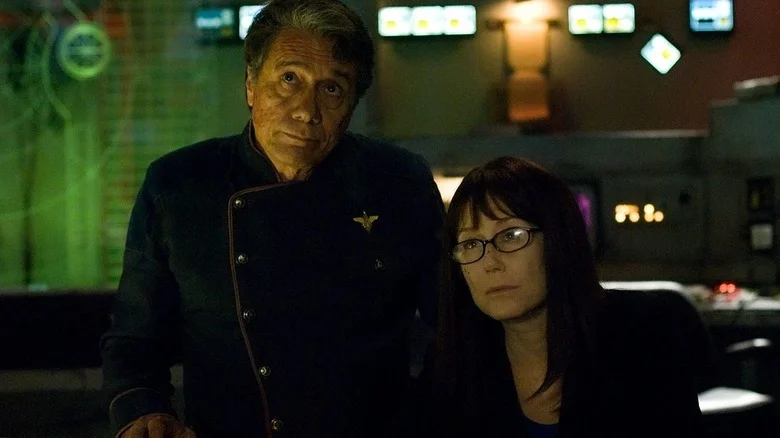
Next up, sci-fi fares no better. The 2003 reimagining of "Battlestar Galactica," ranked ninth, is by all accounts one of the best sci-fi shows of all time. Its core premise involved humanity's desperate search for the mythical Earth after their homeworld was destroyed by the Cylons. The three-part finale, "Daybreak," finally delivers them to Earth, but it’s a prehistoric version, populated by primitive humans. The refugees decide to integrate, ostensibly kickstarting modern civilization, while Starbuck (Katee Sackhoff) mysteriously vanishes, her "divine purpose" fulfilled.
Here's the thing: Stone notes that almost two decades later, "Daybreak" still feels like a narrative mess. The immediate cessation of the Cylon hunt and the decision for an advanced civilization to simply blend in with a primitive one are forced, at best. The notion that Caprica's advanced society directly led to modern Earth society also introduces baffling anachronisms. It’s an unsatisfying conclusion for a show celebrated for its complex themes and character development, proving the old adage that the journey was indeed far superior to the destination.
Universal Television
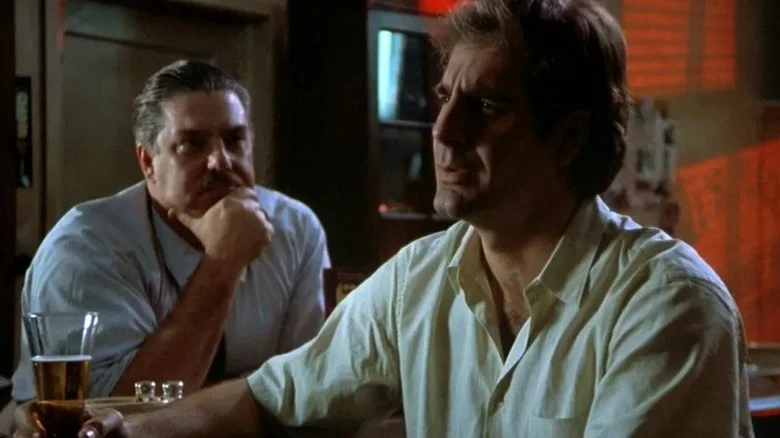
Similarly perplexing is the sixth-ranked finale for the original "Quantum Leap" (1989). Dr. Sam Beckett (Scott Bakula) spent five seasons jumping into different historical figures, correcting wrongs. The finale, "Mirror Image," takes a metaphysical turn, placing Beckett in a town full of familiar faces, presided over by a bartender (Bruce McGill's Al) who might just be God. While Beckett manages to secure a happy ending for his companion Al Calavicci (Dean Stockwell), a stark closing title card delivers the ultimate gut punch: "Sam Beckett never returns home himself."
This is an absolutely brutal way to end a show built on the premise of a hero trying to get home. The implication is a never-ending, altruistic quest, which sounds noble in theory, but as Stone rightly observes, it does little to mitigate the abrupt, ominous tone of that final shot. With Scott Bakula notably absent from the 2022 "Quantum Leap" revival, Beckett's fate remains an infuriatingly open question, leaving original fans hanging.
NBC
## The Un-Funny and the Un-Satisfying: *Seinfeld* and *Game of Thrones*
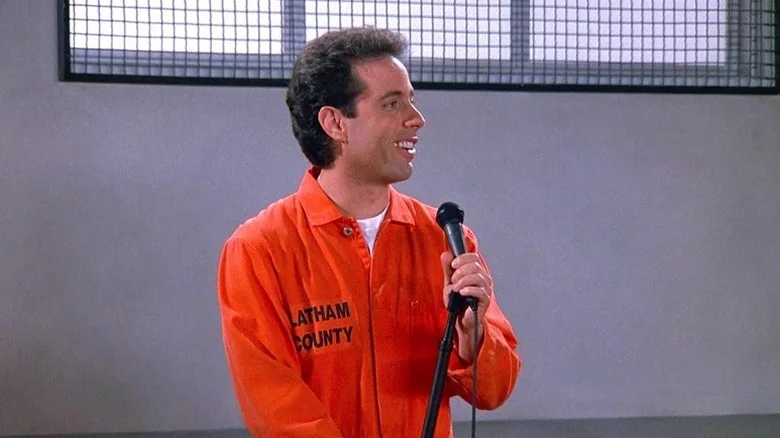
Moving to number eight, "Seinfeld" offers a classic example of a beloved show trying to be "too on-brand" for its own good. This "show about nothing" fundamentally redefined the sitcom genre. Its double-sized finale, "The Finale," takes Jerry Seinfeld and his friends out of Manhattan, only for them to taunt a mugging victim in a small Massachusetts town and film it. Their punishment? Arrested for violating a Good Samaritan law, they're put on trial, with a parade of wronged guest stars testifying against them.
The episode was divisive from its 1998 premiere. Stone points out it felt less like a true narrative conclusion and more like an extended clip show, especially as it directly followed another clip-heavy episode, "The Chronicle." Even Jerry Seinfeld himself has expressed regrets about the decision to jail the quartet. For a show about self-centered malcontents, perhaps a morally explicit punishment was fitting, but it felt like a cheap gimmick, trading genuine storytelling for nostalgia and a final, hollow laugh.
NBC
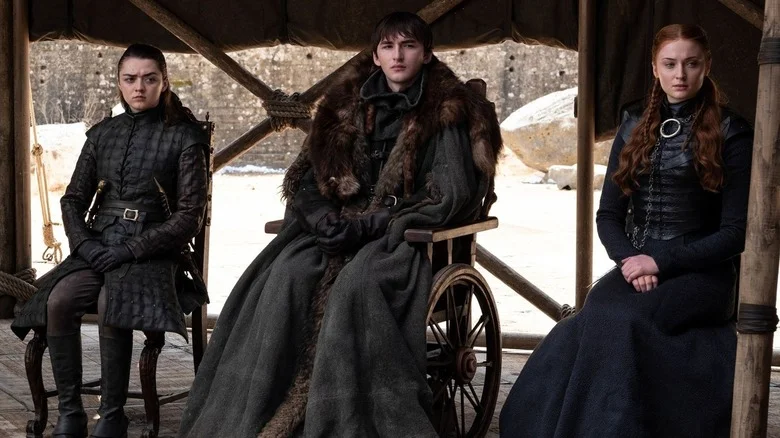
Perhaps the most talked-about modern finale failure, "Game of Thrones," lands at number seven. This fantasy juggernaut, based on George R.R. Martin's books, culminated its eighth season with Daenerys Targaryen (Emilia Clarke) devastating King's Landing. Jon Snow (Kit Harington) then murders the now remorseless Daenerys, and representatives from the various kingdoms hastily appoint Bran Stark (Isaac Hempstead Wright) as the new regent.
The primary issue here, as Stone articulates, is how rushed and contrived the final season felt, particularly once the show moved beyond Martin's published material. Daenerys' abrupt heel turn, for example, lacked the necessary development, feeling more like a forced plot point than an organic character transformation. The finale itself scrambles to position its main characters without adequately explaining the "why" and "how." It's telling that only one "Game of Thrones" cast member was happy with their character's ending – a sentiment clearly echoed by a significant portion of its audience. The destination simply failed to justify the epic journey.
HBOEnding a long-running television series is notoriously difficult. Creators face immense pressure to satisfy loyal viewers, provide closure for beloved characters, and deliver a conclusion that justifies years of emotional investment. Yet, time and again, finales falter, undermining the very legacies they're meant to cap. What we're seeing here isn't just a few isolated missteps; it’s a masterclass in how *not* to stick the landing, often leading to frantic attempts at retconning or outright revivals to mend burnt bridges with audiences.
---
## When Narrative Amputation Feels Like the Plan
### Dallas (1978)
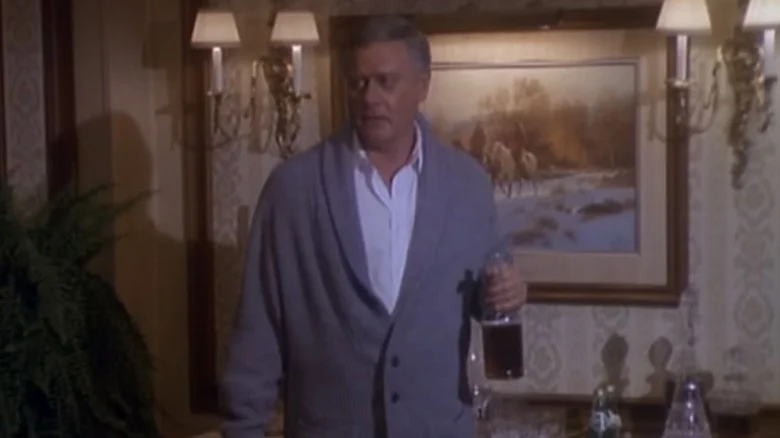
Here's the thing about *Dallas*: it wasn't just a popular primetime soap opera; it was a cultural phenomenon that ran for 14 seasons, from 1978 to 1991. You'd expect a show of that stature, especially one driven by the machinations of an iconic antihero like J.R. Ewing (Larry Hagman), to end with a bang or at least some semblance of satisfying drama. Instead, we got "Conundrum," penned and helmed by longtime showrunner Leonard Katzman. The episode tried to be a moral reckoning, with J.R.'s "numerous sins" finally catching up, pushing him to contemplate suicide. Then, bizarrely, it veered into an "It's a Wonderful Life" fantasy, showing him what the world would be like without him.
CBS
The episode concluded with a gunshot and J.R.'s ultimate fate left maddeningly ambiguous, as his brother Bobby Ewing (Patrick Duffy) reacted in shock off-screen. It was a frustratingly weak exit, particularly for a show known for its over-the-top, often ludicrous plots. This wasn't the kind of show where introspective whimsy worked, and fans deserved a more definitive, meaningful end for J.R. and the overarching saga. The fact that a 1996 television movie had to resolve the cliffhanger as a "fake-out" only underscores how poorly conceived the original finale truly was.
### Roseanne
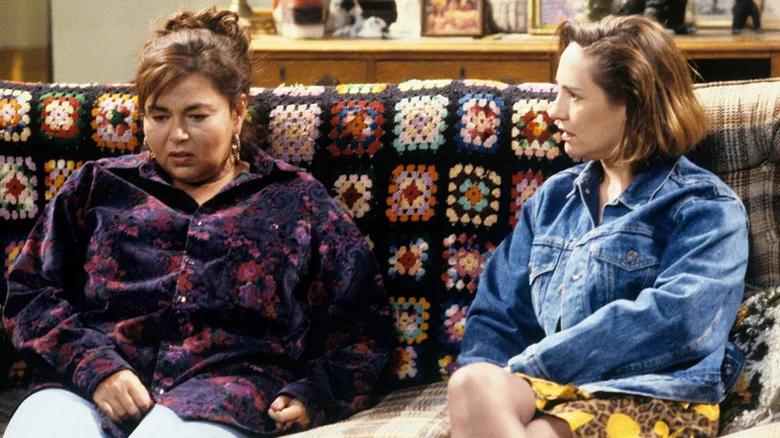
Then there's *Roseanne*. Kicking off in 1988, this series carved out its niche by presenting a starkly honest, often dysfunctional portrayal of a blue-collar family, the Conners, struggling in suburban Illinois. It was a refreshing contrast to the saccharine sitcoms of its era. But by its ninth season, things went off the rails. Roseanne Conner (Roseanne Barr) and her husband Dan (John Goodman) inexplicably won the lottery, throwing the family into a life of luxury that felt completely alien to the show's core premise.
ABC
The finale, "Into That Good Night," delivered a truly crushing blow: the entire ninth season was revealed as a fantasy, conjured by Roseanne to cope with Dan's death from a heart attack. Not only did it echo the "it-was-all-a-dream" trick – a narrative cheat code – it torpedoed the series with a huge downer ending, invalidating an entire year of storytelling. While the 2018 revival technically brought John Goodman's Dan back by re-retconning his death as fiction within Roseanne's novel — a dream within a dream, if you will — it just highlights the desperation to erase the original finale's painful legacy. Frankly, we'll take any explanation that avoids that bleak, unsatisfying conclusion for Dan Conner.
---
## When Fan Service Backfires Spectaculalry
### Star Trek: Enterprise
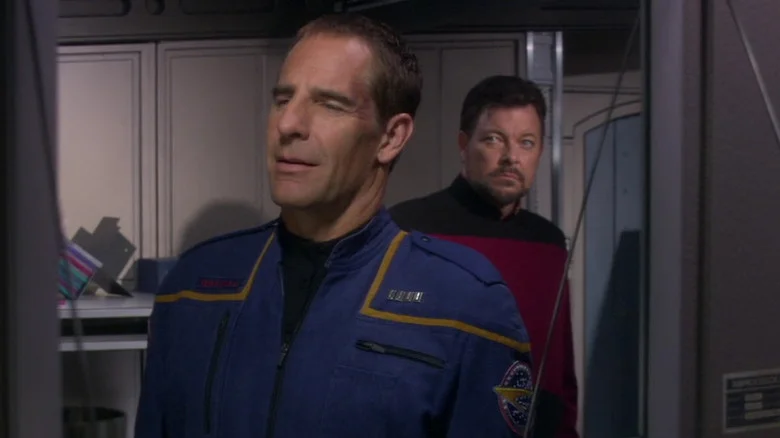
*Star Trek: Enterprise*, the 2001 prequel, aimed to explore humanity's early ventures into deep space, setting the stage for the United Federation of Planets. Captain Jonathan Archer (Scott Bakula) and his crew were positioned as pivotal figures. Yet, its finale, "These Are the Voyages...", chose to become a *Next Generation* episode in disguise. William Riker (Jonathan Frakes) uses a Holodeck simulation of Archer's supposed "final adventure" to resolve his own leadership dilemma.
CBS Studios
The ultimate insult? Archer's close friend and chief engineer, Trip Tucker (Connor Trinneer), dies during this simulated mission, making his death feel hollow and emotionally manipulative. It's truly baffling how a finale could so thoroughly sideline its own main cast, reducing them to supporting players in someone else's story. While *Enterprise* co-creator Brannon Braga might still defend the choice and Scott Bakula was clearly not thrilledby it either, this divisive end wasn't just a poor send-off for the show; it ushered in a decade-long hiatus for *Star Trek* on television, a clear indicator of how badly it missed the mark.
### How I Met Your Mother
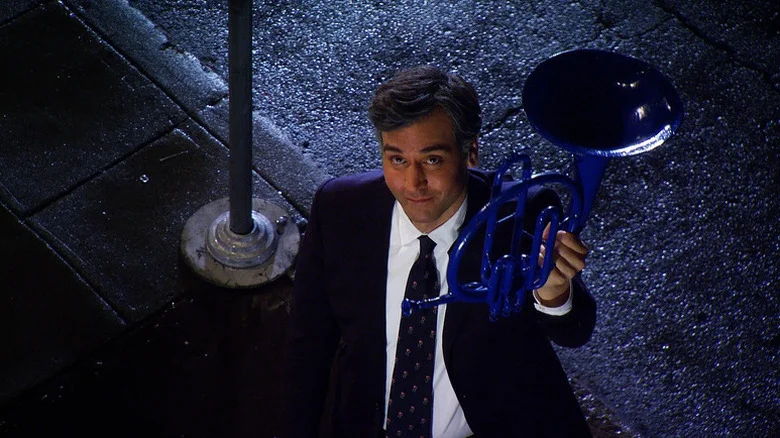
For eight seasons, *How I Met Your Mother* had audiences hooked on one central question: who was Ted Mosby's (Josh Radnor) eventual wife? The anticipation built for years, leading to the reveal of Tracy McConnell (Cristin Milioti). The entire final season was dedicated to the lead-up to their meeting. Then came the double-sized finale, "Last Forever."
CBS
After all that build-up, "Last Forever" delivered a series of rapid-fire, heartbreaking developments. Barney Stinson (Neil Patrick Harris) and Robin Scherbatsky (Cobie Smulders), a relationship the show had spent years developing, divorce in three years. Tracy, the long-awaited mother, dies from an illness. And finally, Ted rekindles his romance with Robin. While some argue the finale was unfairly criticized — and maybe there's a point to be made there — it undeniably felt anticlimactic, almost excessively so in its determination to subvert expectations. The widespread backlash was so significant that an alternate ending was included on the home video release, offering a more pleasant conclusion for Ted and Tracy. That's a strong signal that the original really missed its mark.
### Dexter
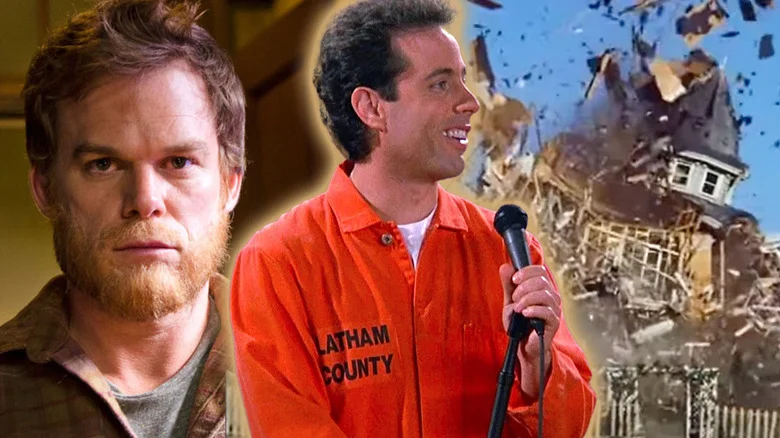
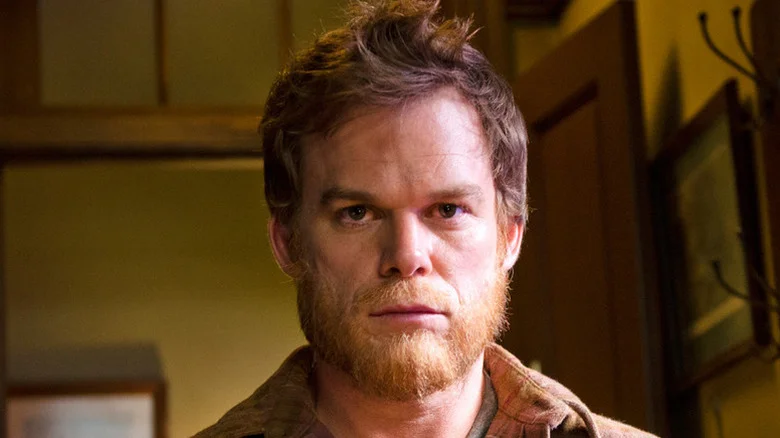
For its first few seasons, Showtime's *Dexter* was a compelling crime thriller, following Miami forensic specialist Dexter Morgan (Michael C. Hall) as he secretly murdered criminals who escaped justice. It was genuinely one of the network's stronger offerings, a unique premise executed with chilling precision. But the show began a slow, painful decline in its later years, a law of diminishing returns that saw its story veer into increasingly uninteresting and ludicrous territory.
Showtime
The series finale, "Remember the Monsters?," brought these issues to a painful head. Dexter grapples with the serial killer Oliver Saxon (Darri Ingólfsson) while reeling from the loss of his adoptive sister, Debra (Jennifer Carpenter). In a moment of supposed self-realization, he accepts that he destroys those closest to him and seemingly drives his boat into a hurricane. Yet, months later, he resurfaces as a lumberjack in Oregon, living under an alias. The pacing was all over the place, the villain uninspired, and Dexter's ultimate decision made no sense for a character whose entire arc revolved around a coded set of rules. The backlash was so intense that Showtime eventually commissioned *Dexter: New Blood* in an attempt to deliver a "proper finale." The original ending left viewers utterly confused about Dexter's choices, and honestly, we're still wondering what exactly went wrong.
---
## The End of the Line: What We Learn from Bad Endings
When you look at these examples, a clear pattern emerges. These finales often fall into one of a few traps: the "it was all a dream" cop-out that nullifies seasons of storytelling, the misguided attempt at a "dark" or "subversive" ending that betrays established character arcs, or the structural blunder that sidelines its own cast for a clumsy crossover or gimmick.
What this means for anyone working in or observing the industry is that audience investment is a fragile thing. Years of loyalty can be shattered in a single hour. The immediate push for alternate endings, revivals, or soft reboots isn't just about fan service; it's often an urgent creative damage control effort. It speaks to a deeper challenge in modern serialized storytelling: how do you build complex narratives over years without painting yourself into a corner, and more importantly, how do you then dismount gracefully? The answer, as these cases show, is far harder than it looks, and the consequences for a show's legacy can be lasting.