Christopher Nolan's Tenet: The 'The Pitt' Actor Viewers Often Missed
·5 min read
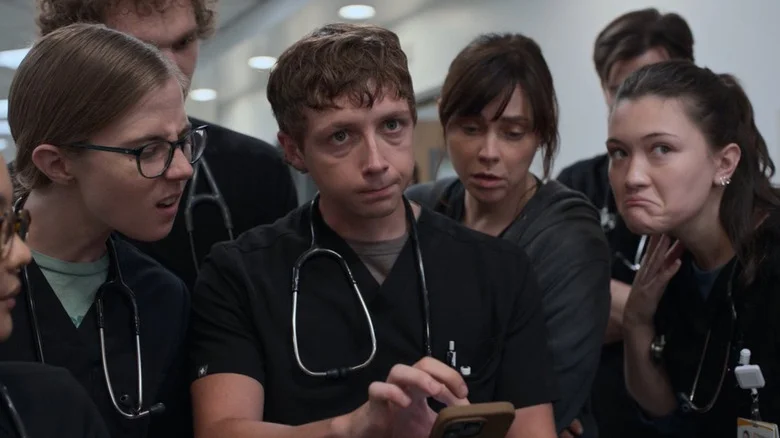
It’s easy for an actor to disappear into a role, especially when that role is shrouded in tactical gear and embedded within a multi-million dollar, time-bending epic. But Fiona Dourif's recent ascent as Dr. Cassie McKay on HBO Max’s medical drama "The Pitt" throws her earlier work into sharp relief, revealing a fascinating career arc that few would have predicted just a few years ago. Here's a performer who spent years cultivating a presence in horror, only to emerge as a mainstream favorite in a genre miles away, making it all too easy to overlook her significant, if obscured, contribution to one of Christopher Nolan's most ambitious films.
HBO Max
From Horror Mainstay to Medical Drama Breakout
For years, Fiona Dourif's name was synonymous with horror. She carved out a niche in a demanding genre, earning a reputation for compelling performances. Yet, in her 40s, she's undergone a dramatic transformation, finding unprecedented success in "The Pitt." This isn't just a pivot; it's a full-blown career reinvention that has placed her firmly in the mainstream spotlight. As Dr. Cassie McKay, Dourif portrays a character that's been described as considerate and empathetic, a sharp contrast to the darker roles she was typically known for. The show itself, a medical drama, has resonated deeply with audiences, reportedly earning praise from real-life doctors for its perceived realism. This broad appeal has propelled Dourif to a level of stardom she hadn't quite reached before, establishing her as a formidable presence in a new domain.
A Submerged Role in Nolan's "Tenet"
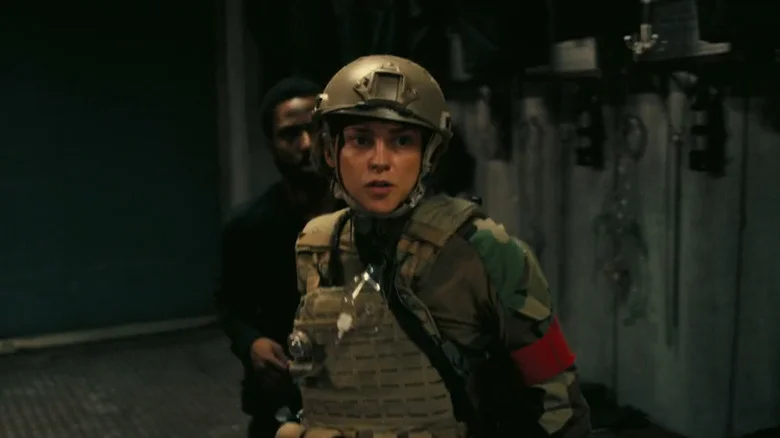
It's precisely this current visibility that makes her involvement in Christopher Nolan's 2020 thriller, "Tenet," such an intriguing footnote. Many who now recognize Dourif as the empathetic Dr. McKay would likely be surprised to learn she was part of Nolan's ensemble. In "Tenet," a film known for its intricate, time-bending narrative and ambitious practical effects, Dourif played Wheeler, a soldier leading the Blue Team under military commander Ives, portrayed by Aaron Taylor-Johnson.
The challenge for recognition wasn't just the relatively smaller scope of her part compared to leads like John David Washington, Robert Pattinson, Elizabeth Debicki, and Kenneth Branagh. Dourif’s character was heavily kitted out in military gear throughout her scenes, effectively obscuring her recognizable features. It’s a testament to the transformative power of costumes and makeup, and the nature of large-scale productions where even significant actors can blend into the operational fabric of the story. She did, however, capture a moment with Pattinson on set, which you can still see on her Instagram, a small piece of evidence of her presence within that massive undertaking.
Warner Bros.
The "Tenet" Context: Ambition and Division
"Tenet" itself was a landmark film for several reasons. Released in 2020, it was Nolan's bold attempt to bring audiences back to cinemas during the early days of the COVID-19 pandemic, a move that reportedly caused friction with Warner Bros. The film, with its reported $200 million budget, performed "relatively okay" under those unprecedented circumstances but fell short of blockbuster expectations. Its complex narrative, centered on a secret agent (John David Washington) preventing World War III through "time-bending" mechanics involving surprisingly practical action, proved divisive. Even Nolan himself has suggested many viewers may have missed the point.
Working on a film of this scale, especially one with such logistical nightmares due to its time-shifting sequences and hundreds of extras, must have been an experience in itself. Dourif shared some insights into working with auteur directors like Nolan and Paul Thomas Anderson in an interview with Flaunt. She made a clear distinction, noting that while "acting is acting" regardless of who's calling the shots, there's a particular reassurance when working with a director who commands trust and resources.
Behind the Auteur's Lens: Trust and Craft
"It is much easier on set when everyone trusts the director," Dourif explained. "We feel reassured that they won't move on unless they have the performance, and they usually have the money to do that." This observation cuts to the core of big-budget filmmaking: the combination of visionary direction and the financial backing to execute that vision. She fondly recalled Paul Thomas Anderson's less formal approach, often letting scenes begin when actors were ready. With Nolan, on a set grappling with the complexities of a $200 million production and mind-bending logistics, that trust in the director's leadership would have been paramount. Dourif's take suggests that a great director simplifies the actor's job, regardless of the project's scale or technical demands.
This sentiment offers a crucial perspective on the craft. For an actor like Dourif, shifting from indie horror to a Nolan blockbuster, then to a popular network drama, the underlying principle of delivering a believable performance remains constant. What changes is the ecosystem around that performance: the scale of the production, the demands of the director, and the resources available to achieve the desired effect.
The Enduring Power of Adaptability
Fiona Dourif's journey highlights an enduring truth in the entertainment world: an actor's longevity often hinges on their adaptability and willingness to embrace diverse roles. Her seamless transition from a genre veteran to a mainstream medical drama star, while quietly having a role in one of the past decade's most talked-about sci-fi films, speaks volumes about her range and resilience. It's a reminder that even in the most high-profile productions, individual contributions can sometimes fly under the radar, only to be appreciated in retrospect as an actor's career takes new, unexpected turns. If you're looking to catch her current work, "The Pitt" is available for streaming on HBO Max.