Thirty years on, the enduring appeal of 1983's cult comedy "Strange Brew" isn't just about Rick Moranis and Dave Thomas, those iconic Canadian hosers, swilling Molsons and calling each other "eh." It's a film that resonates because it's a glorious mess, a high-concept, low-brow triumph born from a surprisingly literary foundation. Here's the thing: while many might remember its slapstick beer-soaked antics, the deeper story is how a conscious decision to lean on Shakespeare inadvertently birthed one of the most delightfully unhinged comedies of its era.
From SCTV to the Silver Screen: The McKenzie Brothers' Ascendance
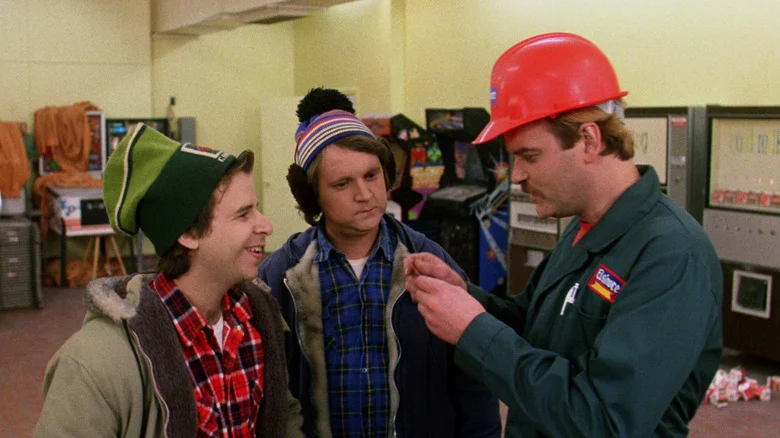
Before "Strange Brew," Bob and Doug McKenzie were already household names in Canada, and rapidly gaining traction in the States, thanks to their segment "Great White North" on "SCTV." This Canadian sketch comedy show, featuring an absurdly talented cast including John Candy, Catherine O'Hara, Eugene Levy, and Rick Moranis, consistently outmaneuvered its American counterpart, "Saturday Night Live," with its sharper, more cerebral satire. "SCTV" took aim at everything from "Fantasy Island" to "The Godfather," cultivating a unique brand of humor that allowed its performers considerable leeway to explore characters without exhausting them, unlike the more commercially constrained network television of the time.
The McKenzie Brothers, however, became an unexpected phenomenon. Their simple premise — two brothers, obsessed with beer and doughnuts, offering bizarre insights into Canadian culture — exploded into popular culture. Their comedy LP, "The Great White North," went platinum in 1981. This success caught MGM's attention, prompting the studio to greenlight a feature film for the duo with a modest $4 million budget. The studio, it seems, wanted to capitalize on the characters' popularity, but wasn't entirely sure if Moranis and Thomas could carry a full-length movie.
The "Hamlet" Imperative: A Story That Simply Works
Faced with the challenge of stretching a five-minute sketch into a ninety-minute film, Dave Thomas and Rick Moranis made a curious decision: they decided to build the plot around William Shakespeare's "Hamlet." It wasn't an accident of discovery; it was a deliberate choice. Thomas sought out first-time screenwriter Steve De Jarnatt (who would later write and direct the unsettling "Miracle Mile") and tasked him with penning a script that would "riff on 'Hamlet.'"
Why "Hamlet," of all things? As Thomas explained in a 2000 interview with IGN, the logic was surprisingly pragmatic: "That's at least a story that works." Hamlet's narrative backbone — usurpation, revenge, familial betrayal, a touch of madness — offers a robust framework that, even when subverted or played for laughs, provides a recognizable structure for audiences. It’s a story with clear character archetypes and motivations, something concrete to hang comedic chaos upon.
De Jarnatt's initial draft, however, hewed a little too closely to the source material. Thomas encouraged him to loosen up, to "Bend this around a little bit. Have some fun with it. There's a lot of structural stuff that could be fun. We're Rosencrantz and Guildenstern, and make the girl Hamlet, whose father is killed. See what you can do with that." This directive was the turning point, transforming a potential straight parody into something far more inventive: a comedic take on "Hamlet" filtered through the lens of Tom Stoppard's absurdist play, "Rosencrantz and Guildenstern are Dead," with the McKenzie brothers slotting neatly into the roles of the bewildered, minor characters caught in a grander drama.
A Collision of Ideas: When Highbrow Meets High-Test
The resulting film casts Lynne Griffin as Pam Elsinore, the 'Hamlet' figure, inheriting the Elsinore family brewery after her father's suspicious death. Max von Sydow, in a stroke of genius casting, plays Brewmeister Smith, a quasi-Claudius figure with plans for world domination via mind-controlling beer. Paul Dooley's Uncle Claude takes up with Pam's mother, Gertrude (Jill Frappier), mirroring Claudius's usurpation of the throne and bed. The structural beats are all there, twisted and amplified for comedic effect.
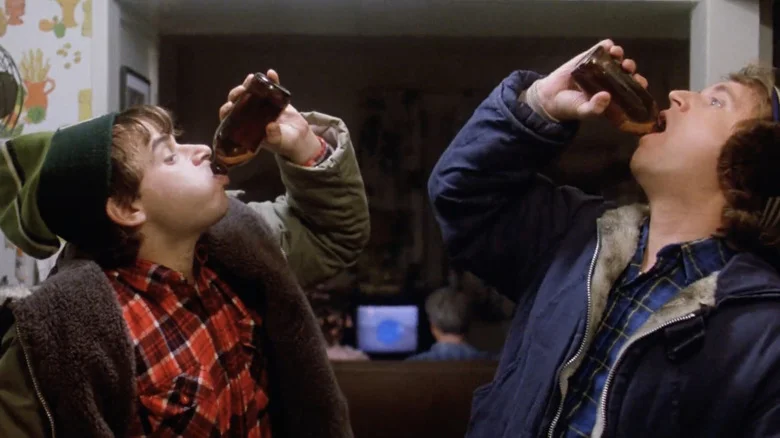
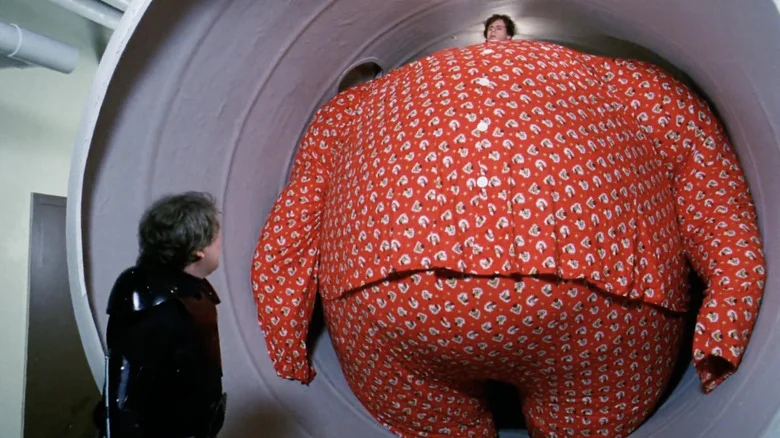
And yet, if you went into "Strange Brew" expecting a faithful adaptation of Shakespeare, you'd be sorely mistaken. The film quickly morphs from a loose "Hamlet" riff into something closer to an Abbott & Costello farce, driven by the McKenzie brothers' escalating antics. Bob and Doug stumble through the plot, often as catalysts or passive observers, occasionally getting distracted by their love of beer and back bacon. The film's climax, with Bob saving the day by guzzling an entire vat of contaminated beer, is pure, unadulterated slapstick, culminating in a hero shot for Hosehead the dog that Shakespeare certainly never envisioned for Fortinbras.
The "accidental" genius isn't that they unknowingly adapted "Hamlet." It's that the final product, a cult classic for decades, achieved a level of sophisticated silliness that even its creators hadn't entirely planned. Thomas himself admits the perceived intelligence of the writing wasn't a grand design:
"Again, people give the thing credit for being smarter in its writing than it ever could be, because it was more of a collision of ideas trying to find a voice. I think we found a 'tone' in the performing, and I found more of it in the editing. Rick went off to do something else, and I edited the picture, but there was no master plan for the screenplay. It was a true comedy of errors."
This "comedy of errors" grossed $8.5 million at the box office, just breaking even. It's not on anyone's list of greatest "Hamlet" adaptations, nor should it be. But that misses the point entirely.
The Enduring Lesson of Unplanned Brilliance
"Strange Brew" stands as a testament to the power of a strong structural starting point, even when the creative journey veers wildly off course. It underscores how embracing a known narrative, even ironically, can provide the necessary scaffolding for improvisational genius and character-driven comedy to flourish. Sometimes, the most memorable work comes not from a meticulously crafted master plan, but from a "collision of ideas" that, against all odds, finds its perfect, messy voice. So, if you're ever struggling to kickstart a project, remember the McKenzie brothers: sometimes, all you need is a solid story that works, and then permission to make it your own kind of wonderfully ridiculous.