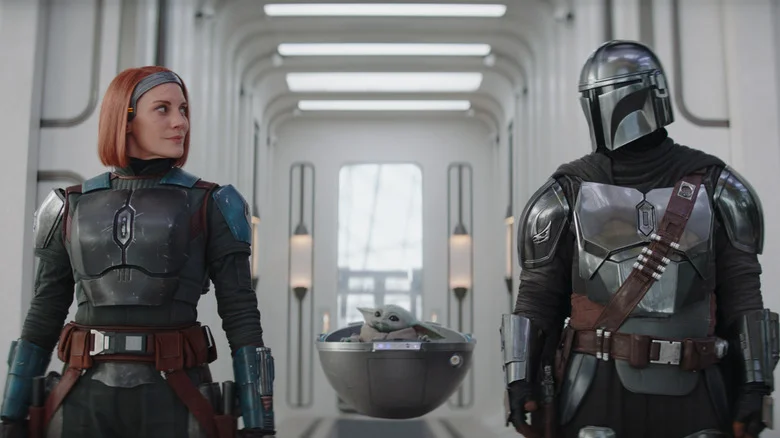
Lucasfilm just pulled back the curtain on a significant strategic pivot, one that says quite a bit about its approach to the sprawling Star Wars narrative. What was once slated to be The Mandalorian Season 4, a direct continuation of the Disney+ series and a pivotal piece of the "New Republic era" storyline, is now a theatrical film titled The Mandalorian and Grogu. This isn't just a simple format change; it’s a move with profound implications for how the franchise structures its interconnected stories, particularly those featuring the much-anticipated Grand Admiral Thrawn.
The Scrapped Season 4 and Thrawn's Original Trajectory
The original plan for The Mandalorian Season 4 was far more than just another run of episodes for Din Djarin and his young charge. According to Jon Favreau, the show's main creative architect, these scripts were deeply embedded in the wider narrative fabric of the "New Republic era." They weren't standalone adventures; they were designed to be a bridge, specifically "teeing up what was happening moving into [the second season of] 'Ahsoka.'"
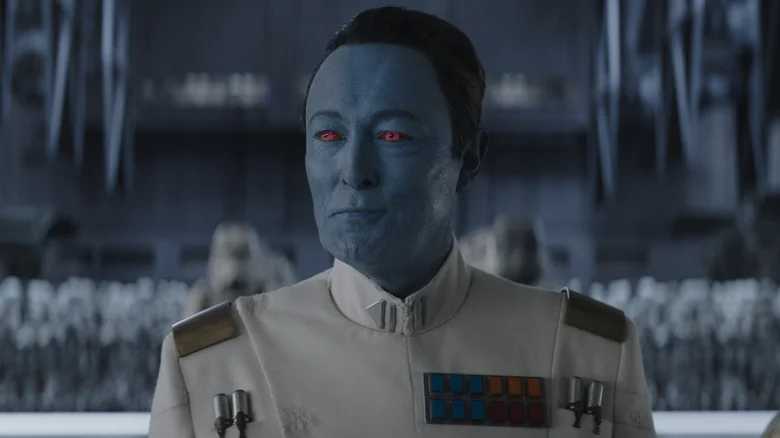
Here's the thing: the core focus of those unproduced scripts was Grand Admiral Thrawn. Favreau made it clear that Season 4 was "about Grand Admiral Thrawn and following the larger storyline [of this era of the 'Star Wars' timeline]." This detail is crucial. Thrawn, a character who initially rose to prominence in Timothy Zahn's non-canonical "Heir to the Empire" novels in the 1990s, has become a fan favorite. His re-entry into canon began with Star Wars Rebels Season 3, culminating in his live-action debut in Ahsoka Season 1, with Lars Mikkelsen masterfully portraying both animated and live-action versions.
Lucasfilm head Dave Filoni has publicly positioned Thrawn as nothing less than the "big bad" of this entire New Republic era—that post-original trilogy, pre-sequel trilogy period that’s been largely explored through the Disney+ series. Knowing this, The Mandalorian Season 4 would have been integral to building out his threat and influence across the galaxy, almost certainly picking up threads from the Ahsoka Season 1 finale, which detailed Thrawn's "dark, twisted plan" to reclaim power.
The Cinematic Pivot: Why a Movie, and What Changes?
The move to a feature film, set to hit theaters May 22, 2026, marks the franchise's return to the big screen for the first time since late 2019. This alone suggests a desire to reignite the theatrical side of Star Wars. But making the jump from television to film isn't as simple as changing the aspect ratio. Favreau explicitly stated, "You can't just take those scripts and turn them into a movie." The Season 4 scripts were burdened by "a lot of characters" and "assumed you'd watched the whole show."
So, for The Mandalorian and Grogu, Favreau had to "start from scratch, essentially." The new film will be a "completely different medium" with a story designed to be more broadly accessible. The focus shifts to the core "archetypes" of the "hardened warrior with their vulnerable young apprentice." The aim is for viewers to "know these characters well, even if you've never seen the show," while still delivering "a lot of 'Star Wars'" and hints at "where things are going [in the wider universe]." Crucially, it must work as a "standalone film."
Navigating the Trade-offs: Interconnectedness vs. Accessibility
This decision highlights a tension Lucasfilm is clearly grappling with: how do you foster a deeply interconnected, serialized narrative universe while also ensuring individual projects can stand on their own and attract new audiences? The original Season 4 plan was designed for the former, demanding viewer commitment to the broader "Mandalorian-verse" and its intricate political and character web. The film, conversely, prioritizes the latter.
The instinct is to read this as simply an upgrade, a move to the 'bigger' screen. But that misses the point of the narrative compromise. If Season 4 was going to be the crucible for Thrawn's escalation, directly setting up Ahsoka Season 2, then removing that piece creates a vacuum. It suggests that Thrawn's arc will either be streamlined, condensed, or perhaps even entirely re-contextualized in Ahsoka Season 2, which we know will arrive later this year. How will the next season of Ahsoka pick up the threads of Thrawn's plan without the intended setup from The Mandalorian? That’s a significant narrative challenge.
It's not that Thrawn won't appear in the wider universe. We know he's in Ahsoka Season 2. The open question is whether he'll make the leap to the movies. Given the need for The Mandalorian and Grogu to function as a standalone experience, it seems less likely that it would directly feature Thrawn as its primary antagonist, unless his introduction is handled with extreme care for newcomers. This could potentially relegate one of the saga's most significant "big bads" to the small screen for the foreseeable future, even as the New Republic era makes a grand cinematic comeback.
What This Means for the Future of Star Wars Storytelling
This strategic shift for The Mandalorian underscores Lucasfilm's ongoing balancing act between catering to its deeply invested fanbase and attempting to capture the broader, more casual moviegoing audience. On one hand, moving Mando and Grogu to the big screen for the first time in years is a powerful statement about the franchise's cinematic ambitions. It's an effort to re-establish a theatrical presence, offering a familiar, beloved duo as the spearhead. On the other hand, it means re-evaluating the carefully constructed narrative bridges between its streaming series, especially concerning a character as central as Grand Admiral Thrawn.
The move suggests a prioritization of individual project accessibility, even if it means some re-engineering of the overarching continuity. For industry professionals working in IP-driven franchises, this isn't an uncommon dilemma. How much "homework" can you expect from an audience? The answer, at least in this case, seems to be: less for the big screen, more for the small. The outcome of The Mandalorian and Grogu, both commercially and critically, will be an important bellwether for how Lucasfilm continues to navigate this complex, interconnected narrative future.