Bryan Fuller is, by most industry measures, an anomaly. In a media landscape often dominated by committee-driven content, he’s carved out a reputation as a true television auteur, imbuing every project with his unmistakable blend of gothic whimsy and psychological darkness. Think of the candy-colored macabre of 'Pushing Daisies' or the unsettling, surreal artistry he brought to 'Hannibal.' So it's been something of a curious wait for his feature film directorial debut, 'Dust Bunny,' which quietly premiered in 2025.
The film, which reunites Fuller with his 'Hannibal' star Mads Mikkelsen, had a blink-and-you-miss-it theatrical run. It barely registered at the box office, which might have spelled doom for a less singular vision. And yet, the story doesn't end there. 'Dust Bunny' is now finding its audience and, significantly, reportedly 'thriving' on HBO Max, per data from FlixPatrol. This shift from an anemic theatrical showing to a streaming success offers a telling snapshot of the evolving dynamics for niche, creator-driven projects, especially those with a strong genre pedigree and a dedicated fan base.
Fuller's Signature Blend: Whimsy and the Macabre
For those familiar with Fuller's television work, his films are less about conventional narrative arcs and more about cultivating an immersive, distinctive atmosphere. He's a storyteller who understands the power of aesthetic and psychological depth, often using vibrant visuals and darkly humorous undertones to explore themes that are, at their core, quite grim. 'Dead Like Me' playfully grappled with bureaucracy in the afterlife, while 'Pushing Daisies' presented murder mysteries with a fairytale sensibility. His take on 'Hannibal' wasn't just another adaptation; it was a queer, hallucinatory journey into the psyche of its titular character, a bold reimagining that proved he could take established IP and make it entirely his own. This idiosyncratic approach is precisely what makes 'Dust Bunny' so intriguing.
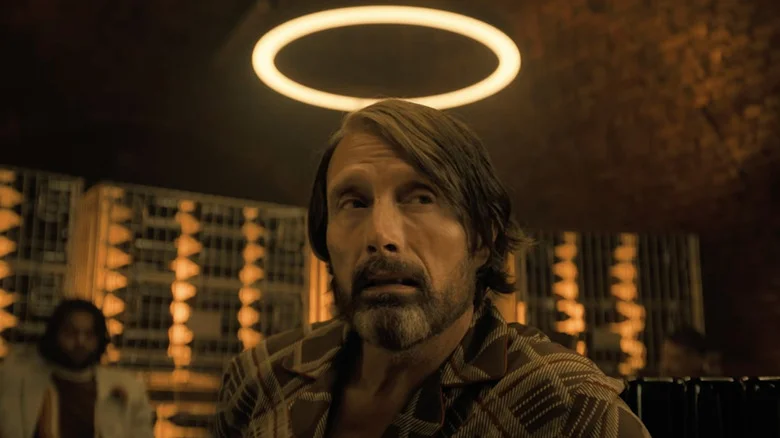
In 'Dust Bunny,' Fuller dials back the intensity somewhat from the high gothic horror of 'Hannibal,' leaning more into that 'Pushing Daisies'-esque sensibility. The premise itself feels like a dark fairytale: a young girl named Aurora (Sophie Sloan) seeks help from her neighbor, known only as Resident 5B (Mikkelsen), believing he 'kills monsters' because a creature under her bed devoured her parents. Resident 5B is, in fact, a hitman, but the film doesn't shy away from the fantastical. The monster under Aurora's bed is quite real, even if its portrayal on screen relies on clever staging and shadows, much like how 'Jaws' famously kept its shark mostly off-screen. And then there's Sigourney Weaver as Laverne, 5B's handler, who pushes him to eliminate Aurora, adding another layer of very adult peril to this unsettling child's quest.
The reunion with Mads Mikkelsen is undoubtedly a draw for many. Mikkelsen's ability to convey both menace and unexpected vulnerability fits perfectly within Fuller's universe, making their collaboration a natural extension of their previous work. Their dynamic in 'Dust Bunny' is a clear callback for fans of 'Hannibal,' hinting at the same kind of complex, morally ambiguous relationships that defined that series.
The Streaming Lifeline for Distinctive Voices
The journey of 'Dust Bunny' — from a muted theatrical debut to a burgeoning streaming hit — illustrates a crucial pivot point for a certain caliber of cinema. For unique, creator-driven films that defy easy categorization or mainstream appeal, the traditional theatrical release model often falls short. Limited screens, minimal marketing budgets, and the pressure of opening weekend numbers can effectively bury a project before it has a chance to breathe.
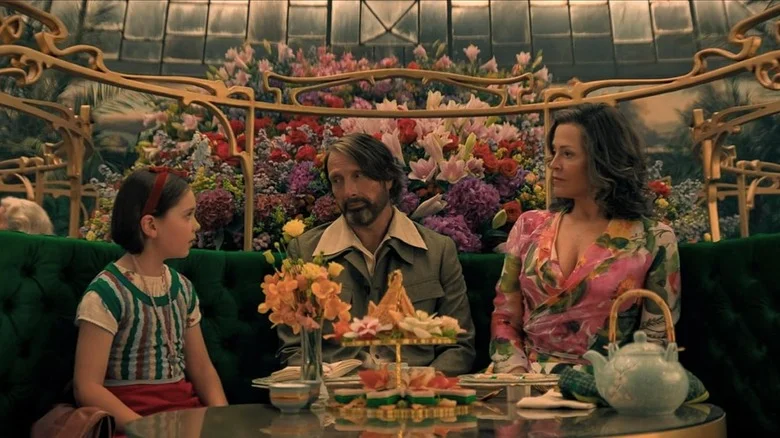
Streaming platforms, however, offer a different kind of ecosystem. They allow films like 'Dust Bunny' to bypass the immediate pressure of the box office and find their audience over time. For a director like Fuller, whose work often appeals to a dedicated but specific demographic, a platform like HBO Max is an ideal home. It's where fans of his previous series likely reside, accustomed to seeking out distinctive, often complex narratives. The term 'thriving' on a streamer doesn't necessarily mean blockbuster numbers; it suggests engagement, viewership, and perhaps even critical buzz within its target demographic — enough to validate its existence and perhaps greenlight future projects.
The Auteur's Medium: Film vs. Television
The idea of an 'auteur' — a director whose personal artistic vision is so prominent that they are considered the 'author' of the film — was initially coined for cinema. Yet, Bryan Fuller’s career has largely defined the concept within television, a medium often seen as more collaborative and writer-driven. It's telling, then, that it took him this long to helm a feature. Film demands a different rhythm, a different kind of focus for a storyteller known for intricate, character-building episodic arcs. While 'Dust Bunny' functions perfectly as a self-contained story, one might argue that Fuller's profound talent for developing characters and weaving complex mythologies truly shines when given the expansive canvas of a series.
His return to feature filmmaking, especially one that revisits the tone of his earlier TV work and reunites him with a key collaborator, acts as an interesting test case. It shows that even if the economics of traditional film distribution didn't favor 'Dust Bunny,' the demand for Fuller’s unique brand of storytelling persists. The film's streaming life isn't just a win for Fuller and his fans; it's a testament to how platforms like HBO Max are becoming indispensable incubators and distribution channels for creative visions that might otherwise be overlooked. For industry professionals watching the shifting sands of content consumption, the success of 'Dust Bunny' on streaming highlights a clear path forward for artistically bold, genre-bending projects: find your niche, lean into your unique voice, and let the audience come to you on their own terms.