There's a curious convergence happening in the entertainment industry, one that should catch the attention of anyone tracking the future of technology and its societal impact. It’s not just about content anymore; it’s about how we collectively process the accelerating pace of scientific advancement.
Consider the recent flurry of activity around two iconic speculative fiction franchises: The X-Files and Animorphs. News broke recently that Academy Award-winning filmmaker Ryan Coogler is attached to produce a reboot of the middle-grade series Animorphs for Disney+, alongside his previously announced work on a new iteration of The X-Files. This isn't just another nostalgia play. It represents a significant industry bet on established intellectual property, certainly, but also on the enduring power of sci-fi narratives to explore profound technological and ethical questions, updated for a contemporary audience.
High-Caliber Talent Redefining Sci-Fi IP
Coogler's involvement with both projects is particularly telling. Known for his critically acclaimed work on films like Black Panther, he brings a gravitas that elevates these reboots beyond simple remakes. It’s a clear signal from major studios – in this case, Disney+ – that complex, genre-bending storytelling isn't just for niche audiences. Investing in a talent like Coogler suggests a strategic move to infuse these properties with depth and relevance, aiming for broad appeal while tackling themes of alien invasion, government conspiracies, and the very nature of humanity. For Animorphs, a series created by Katherine Applegate and Michael Grant about teenagers who gain shapeshifting abilities to fight extraterrestrial invaders, the shift from its original Nickelodeon run (1998-2000) to a Disney+ platform under Coogler’s eye could mean a richer narrative, perhaps even leaning into the darker undertones that older readers remember from the books. The project is still in early development, with Bayan Wolcott (known for The Testaments and The Summer I Turned Pretty) attached as writer and executive producer, and Proximity Media’s Simone Harris and Dezi Gallegos overseeing production. This team is designed to hit.
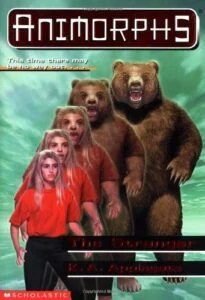 The logline for the new Animorphs series—"Animorphs follows a group of teenagers who uncover a hidden threat lurking beneath their everyday lives, all while juggling relationships, curfews, and the chaos of high school"—certainly sounds like it's designed to resonate with today's young adult demographic, but with Coogler producing, it's fair to expect more than just teen drama. The original narrative already explored themes of identity, morality in conflict, and the psychological toll of war. Reimagining those within a modern context, especially for a streamer like Disney+ that's competing for mindshare, presents a compelling opportunity to not only revitalize a beloved property but also to explore complex ideas about bio-technology and transformation through a high-production lens. This is precisely the kind of IP play that savvy industry watchers need to track, seeing as it sets a benchmark for how established franchises can be given new life while also serving as platforms for serious storytelling.
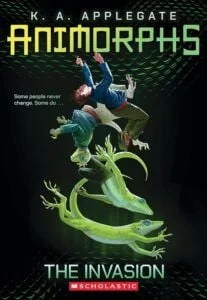 Speaking of complex ideas, there's another fascinating piece of content that puts these themes into sharp relief. It’s not a big-budget reboot, but an original short story that digs deep into the social implications of biotech.
Biotech's Reality Show: Fiction Reflects Our Future
Anjali Sachdeva’s new short story, "Chimera," published in Uncanny Magazine, offers a different, yet equally potent, perspective on our technological trajectory. For those unfamiliar, Sachdeva’s 2018 collection, All the Names They Used for God, proved her talent for exploring the uncanny intersections of science, myth, and humanity. "Chimera" doesn't disappoint.
The story centers on a mother, Savita, who finds herself drawn into a reality show where contestants create genetically modified plants and animals to win challenges. This fictional premise acts as a brilliantly simple setup for exploring some profoundly complex real-world implications of biotechnology. Contestants in the story aren't just modifying flora and fauna; they often bear the marks of bio-enhancement themselves, sporting "custom-colored eyes or stripes of lizard skin across their limbs," or even "colonies of decorative fungus or vines of flowers growing through their hair."
This isn't just fanciful sci-fi anymore. The scientific community is already grappling with the ethics of CRISPR and other gene-editing technologies, which promise unprecedented control over biological systems. While we're not yet seeing reality TV shows about human augmentation, the story taps into a deep cultural anxiety and fascination with altering our biology and our environment. It reflects an underlying question: what happens when biological manipulation becomes a consumer product, something trivialized and gamified for mass entertainment? It forces us to consider the fine line between therapeutic genetic intervention and cosmetic enhancement, between ecological restoration and playing god. The excerpt reveals a protagonist, Savita, who's observing this spectacle of biological creation and modification while navigating her own very human realities, like managing family dynamics around Thanksgiving. It’s a powerful juxtaposition.
The Cultural Significance of Speculative Tech Narratives
The instinct might be to view Coogler’s reboots and Sachdeva’s short story as entirely separate phenomena—one a big-budget Hollywood play, the other a thoughtful literary exploration. But that misses the point. Both are deeply embedded in the evolving conversation around technology. Coogler's projects tap into existing narratives that grappled with tech's impact decades ago, updating them for a world where aliens and shape-shifting might feel less fantastical in the face of AI, synthetic biology, and quantum computing. Sachdeva’s work, meanwhile, serves as a more direct, intimate mirror to the ethical dilemmas emerging from our labs today.
What these trends signal for industry professionals is clear: the cultural discourse around technology is shifting. It’s moving from abstract scientific papers to mainstream entertainment and accessible fiction. This has real implications for public perception, for how nascent technologies are understood (or misunderstood), and for the future regulatory and ethical landscapes. When genetic modification is a reality show premise, it means the conversation is no longer confined to academic journals or specialist conferences. It’s in our living rooms, shaping popular imagination and expectations.
Beyond the Screen: Preparing for a Morphing Future
So, what's the takeaway? For anyone developing or deploying advanced technologies, especially in areas like biotech, AI, or advanced materials, paying attention to speculative fiction isn't a luxury; it's a strategic necessity. These stories, whether they’re Disney+ series or short literary works, are often the first drafts of our technological future. They articulate potential benefits, expose unforeseen risks, and, perhaps most importantly, help us visualize the ethical tightropes we’ll inevitably walk.
The industry needs to engage with these narratives, understand the underlying anxieties and hopes they express, and recognize that public perception is being shaped by more than just product launches and whitepapers. It's being shaped by the stories we tell ourselves about what's possible, and what the consequences might be. Ignoring this cultural processing of technology would be a missed opportunity to genuinely connect with the broader public and anticipate the societal impact of our innovations. These aren't just stories; they're vital thought experiments for a world that's changing at warp speed.