Stack Overflow has been a quiet, dependable cornerstone of the developer's toolkit for well over a decade. It's the first place many of us go for syntax questions, obscure error messages, or a quick code snippet. But the landscape of technical problem-solving is shifting dramatically, and it seems Stack Overflow is finally making its move to adapt. What's just landed in beta isn't merely a fresh coat of paint; it's a strategic evolution for a platform that needs to redefine its role in an era where AI can generate code on command.
The company announced earlier this week that a redesigned beta experience is live at beta.stackoverflow.com, offering the first real glimpse into its "new vision and mission" first shared at WeAreDevelopers in July 2025. This isn't a small thing. For a platform so deeply ingrained in developer muscle memory, any significant change invites scrutiny, but this particular refresh speaks to bigger forces at play in our industry.
The Imperative for Evolution in an AI-Driven World
For years, Stack Overflow thrived on the elegance of its Q&A format: a specific question, a definitive answer, upvotes to establish correctness. It built a vast, invaluable archive of solutions. Yet, the rise of powerful generative AI models like GitHub Copilot and ChatGPT has fundamentally altered how developers find information. Many straightforward coding questions that once populated Stack Overflow's front page can now be answered instantly by an AI, often directly within the IDE.
This evolving environment demands more than just incremental updates. Over the past year, we've seen Stack Overflow introduce features like AI Assist, enhancements to Chat, and even Coding Challenges. But the real tell, I think, is the move to support open-ended questions and facilitate the sharing of "experience-based insights and peer recommendations." This isn't about finding the single right answer anymore; it's about navigating the messy, nuanced world of real-world development where context, opinion, and varied approaches often matter more than strict correctness. Stack Overflow's stated goal to "build the space for every technical conversation, centered on real human-to-human connection and powered by AI when it helps most" feels like a direct response to this shift.
More Than a UI Overhaul: A Philosophical Re-Centering
The visual changes are immediately apparent. The beta offers an 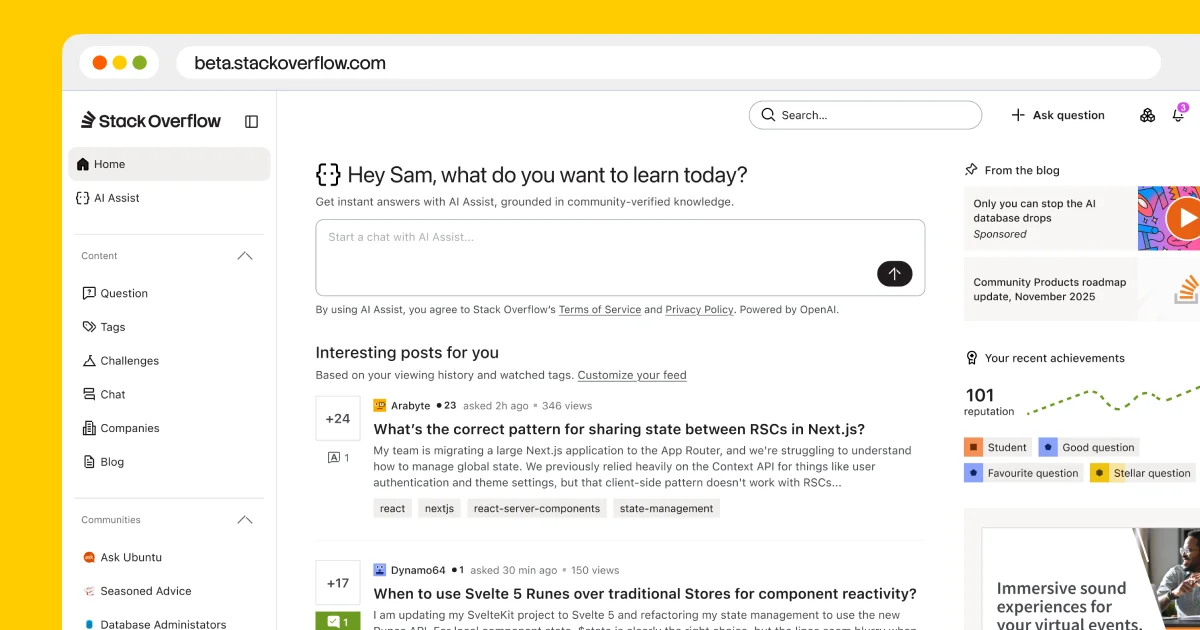 updated design system, with a new color palette, typography, and refreshed icons. For those of us using wider monitors, the site now stretches out, making better use of screen real estate – a welcome practical improvement. Core navigation, both the top bar and side panels, has been simplified. It's cleaner, more modern, and certainly feels more spacious than the
 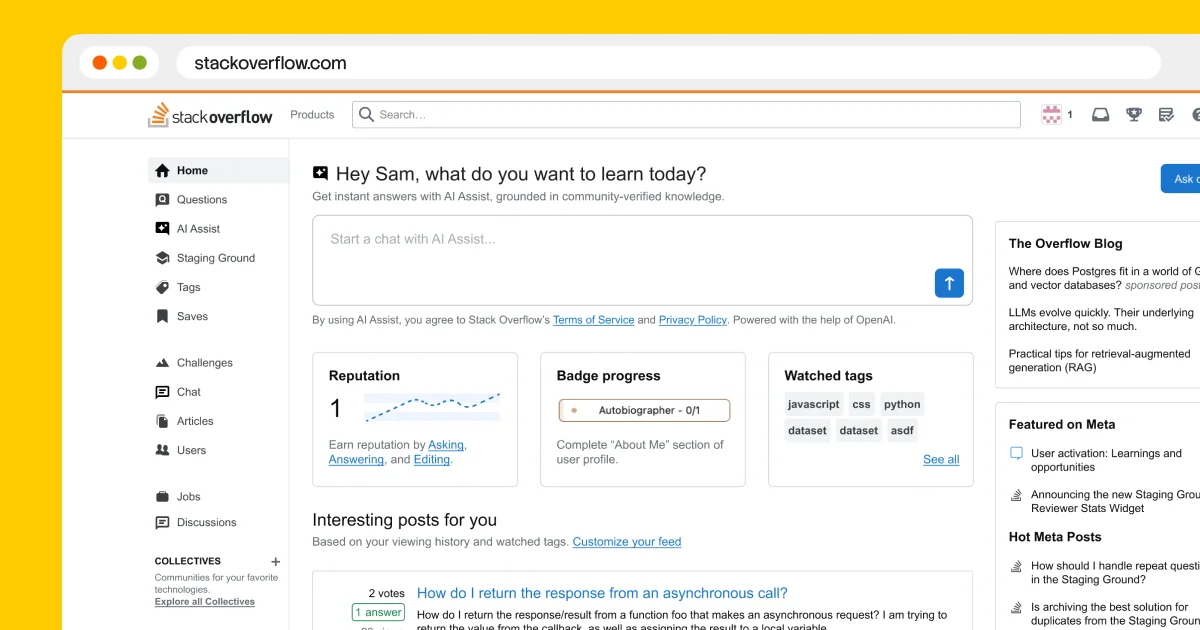 "classic" look. But to focus solely on the aesthetics misses the point.
The redesign is tightly coupled with the broader philosophical shift. By making it easier to share solutions and find "expert perspectives" beyond the strict Q&A format, Stack Overflow is implicitly acknowledging that development problems often lack a single, universally "correct" solution. Sometimes, you need a recommendation, an anecdote, or a discussion of trade-offs. This positions the platform as a broader knowledge hub, not just a definitive answer engine. The balancing act will be in maintaining the quality and signal-to-noise ratio that made Stack Overflow so indispensable in the first place, especially as it moves into more subjective territory.
Navigating the Transition: Community and Control
Introducing such a significant change to a platform with millions of deeply entrenched users is always tricky. Stack Overflow's approach to this transition seems measured, recognizing the potential for user friction. The beta was apparently "built with community feedback and research," a necessary step for any platform of this scale. You can currently opt in to the beta and submit feedback directly through a survey, which is crucial. They're also being upfront about expecting "some bugs, see rough edges, and experience experiments in motion" during this beta period. That's a reasonable stance for a work-in-progress.
A smart move, especially for a site with such habitual users, is the ability to toggle between the classic and new experiences. This will persist for the "next few months" and provides a safety net for users who might find the changes disruptive. The redesign timeline outlines a phased rollout:
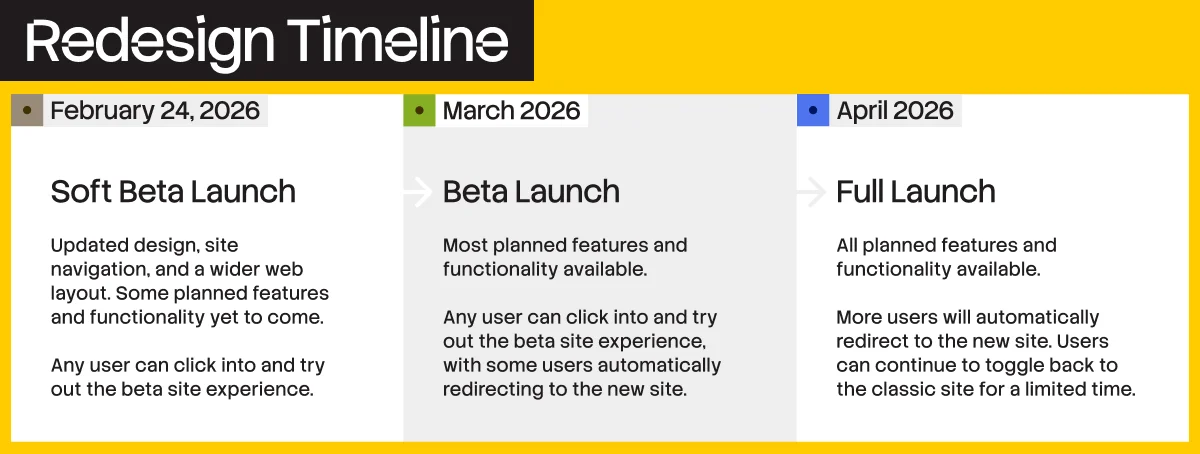
February 24, 2026 marked the soft beta launch, introducing the visual updates. March 2026 will see the broader beta launch with most planned features, potentially redirecting some users automatically. The full launch is slated for April 2026, at which point more users will be moved to the new site, though the classic toggle will remain an option for a "limited time." This gradual transition acknowledges that developer workflows are deeply personal, and change takes time to absorb.
The Road Ahead: Stack Overflow's Next Chapter
Stack Overflow's evolution isn't just about a pretty interface or a slightly wider page; it's about positioning itself for relevance in a dramatically altered technological landscape. The shift towards "every technical conversation," blending human interaction with thoughtful AI assistance, is a necessary gamble. For developers, this could mean a richer, more diverse source of knowledge – less prescriptive, more collaborative. It's an effort to keep human experience, debate, and nuanced understanding at the core of technical problem-solving, even as AI tools become ubiquitous. The challenge now is whether this new vision can re-energize its long-standing community and attract new users who might otherwise turn exclusively to AI for their coding woes. The coming months will tell us a lot about whether Stack Overflow can successfully navigate this next chapter and continue to be an essential resource for technologists worldwide.