The sudden resignation of Dianna Russini from The Athletic in April 2026 isn't just another item in the celebrity gossip cycle; it's a pointed illustration of the extreme pressures confronting modern sports journalism, particularly when professional boundaries intersect with intense public scrutiny. What started as paparazzi photos quickly escalated into a career-defining moment, forcing a seasoned reporter to step away from a major platform.
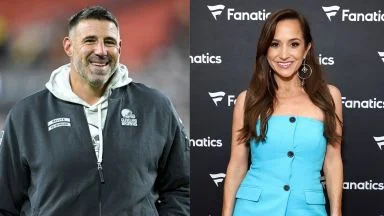
Russini, a prominent sports journalist, and New England Patriots head coach Mike Vrabel, both married to other people, found themselves in a spotlight they certainly didn't seek. Photos published by Page Six depicted them at the Ambiente resort hotel in Sedona, Arizona, engaged in what some deemed overtly personal interactions: holding hands, sharing a hug, and lounging poolside together. For many in the media, these images immediately sparked whispers and outright speculation about an affair.
The Defense and its Limits in the Digital Age
Both Vrabel and Russini moved quickly to deny any impropriety. Speaking to The New York Post, Russini stated, "The photos don’t represent the group of six people who were hanging out during the day." She added a crucial point for anyone familiar with the industry: "Like most journalists in the NFL, reporters interact with sources away from stadiums and other venues." Vrabel echoed this sentiment in his own statement to The Post, calling the interaction "completely innocent" and any other suggestion "laughable."
The instinct is to read this as a straightforward denial, and perhaps it was. But that misses the point. In the current media climate, especially for a high-profile journalist, the line between innocent interaction and perceived impropriety can vanish instantly. While "interacting with sources away from stadiums" is a common, even necessary, part of cultivating relationships that yield exclusive reporting, doing so in a luxury resort and being photographed in what can be framed as intimate poses creates an undeniable optics problem.
The challenge for any reporter is that their credibility hinges not just on their integrity, but also on the public perception of it. When that perception is compromised, even unfairly, the consequences can be severe. And that's exactly what played out here.
The Unsettling Terms of Departure
Just a week after the photos surfaced and the denials were issued, Russini announced her resignation from The Athletic. It wasn't merely a quiet exit; she released a letter via X (formerly Twitter), making her reasons strikingly clear. She spoke of coming to the decision "with deep sadness but with clarity about what is right for me, my family, and the work I have spent my career building." This isn't the language of someone who feels their professional integrity is entirely intact or that the situation has been adequately resolved.
I submitted my letter of resignation to The Athletic. Everything I have to say about it is below. pic.twitter.com/401nrtbEsj
— Dianna Russini (@DMRussini) April 14, 2026
Her letter outlined a scenario where, despite initial support from The Athletic, a "self-feeding speculation" and "media frenzy" took over. Russini described this frenzy as "simply unmoored from the facts," driven by "repeated leaks," and escalating without regard for "the review process The Athletic is trying to complete." She explicitly stated her refusal to "lend it further oxygen or to let it define me or my career," choosing instead to step aside before her contract expired on June 30.
This is where the story gets particularly interesting for industry professionals. Russini's words paint a picture of an internal investigation or process at The Athletic that was being actively undermined by external forces. The "repeated leaks" suggest information, possibly from within the ongoing review or related to the situation, was being strategically released, fueling the very media storm she was trying to quell. It's a testament to the chaotic power of online narratives, where facts can quickly become secondary to perceived narratives, and even denials can be used to generate more content. The "public inquiry" she refused to submit to suggests a situation spiraling beyond The Athletic's control, forcing her hand.
The Broader Implications for Journalistic Practice
The circumstances of Russini's departure highlight a profound tension in modern journalism. On one hand, building strong relationships with sources is paramount, especially in competitive beats like the NFL. Access is king, and sometimes that means interactions happen outside traditional professional settings. For the record, Vrabel is married to Jennifer Vrabel since 1999, and Russini is married to Kevin Goldschmidt, with whom she has two sons, one born in 2022. Both have established personal lives.
On the other hand, the pervasive nature of social media and the insatiable appetite for content mean that any deviation from the strictest professional image can be weaponized. A luxury hotel, a hug, a hand-hold – these become data points for a narrative constructed by anonymous commenters and eager tabloids. For journalists, especially women in male-dominated sports reporting, this burden of perception is often heavier. They must navigate source relationships with an almost hyper-awareness of how every interaction might be seen, not just by colleagues or editors, but by millions online ready to dissect and judge.
This incident creates a chilling effect. It makes reporters think twice about cultivating deeper, more personal source relationships, which are often the bedrock of truly impactful journalism. If the risk of misinterpretation and career damage is this high, how many will opt for safer, more transactional interactions? That would be a loss for the audience, which benefits from the insights those deeper relationships provide.
What This Means for Media Ethics and Reputation
The situation isn't just about individual reputations; it's about the very mechanisms of media accountability and the often-unaccountable nature of online rumor mills. Russini’s resignation, under such terms, feels like a defeat for rational discourse. It implies that the sheer volume of "self-feeding speculation," even if "unmoored from the facts," can carry more weight than an employer's initial support or a journalist's professional track record.
For anyone working in public-facing roles or managing high-profile talent, the lesson here is stark: the digital lens is unforgiving. Appearances can become reality, and controlling the narrative, once it takes hold, is incredibly difficult, perhaps impossible. Russini's proactive step to "refuse to lend it further oxygen" was her attempt to regain agency, but it came at the cost of her role at The Athletic.
The thing worth watching here is how this incident, and others like it, shapes the future of journalist-source interaction. Will news organizations develop clearer guidelines for out-of-office meetings? Will the pendulum swing too far towards caution, inadvertently stifling the very kind of in-depth reporting that relies on trust and proximity? It's a delicate balance, and as Dianna Russini's case tragically demonstrates, sometimes the balance tips, with significant professional consequences.