Picture books often get filed away as delightful, but fundamentally simple, exercises in storytelling. They’re for kids, after all. Yet, a new title landing on the Summer 2024 frontlist, Drew Beckmeyer's *The First Week of School*, quietly challenges that perception, offering a masterclass in narrative engineering that’s anything but simple.
My read on this book, particularly after hearing from Beckmeyer himself, is that it's a standout example of how authorial background, combined with a willingness to embrace complex creative constraints, can elevate a genre. We’re not just talking about a charming story; we’re looking at a carefully constructed piece of literary architecture that manages to sustain multiple, almost entirely independent, narrative threads within the confines of a few dozen illustrated pages.

The Teacher's Advantage: Authentic Chaos, Refined
It's no accident that Beckmeyer achieves this. He’s spent over a decade as an elementary school teacher. That’s more than just a day job; it's a deep immersion in the very ecosystem he’s trying to depict. "My access to what kids are thinking and feeling and yelling at each other is almost an unfair advantage," Beckmeyer admits. He's earned his free passes, as he puts it, to write what he knows.
And what he knows, intimately, is the delicate balance of a classroom: a space where dozens of individual dramas unfold simultaneously, often with minimal direct interaction between students, yet each action subtly influencing the larger environment. He's translating that lived experience into a narrative structure. Think about it: a classroom is a microcosm of interconnected, yet independent, stories playing out. That’s a tough concept to distill into a concise picture book, let alone execute with six distinct arcs.

Weaving Six Threads Without Tangling
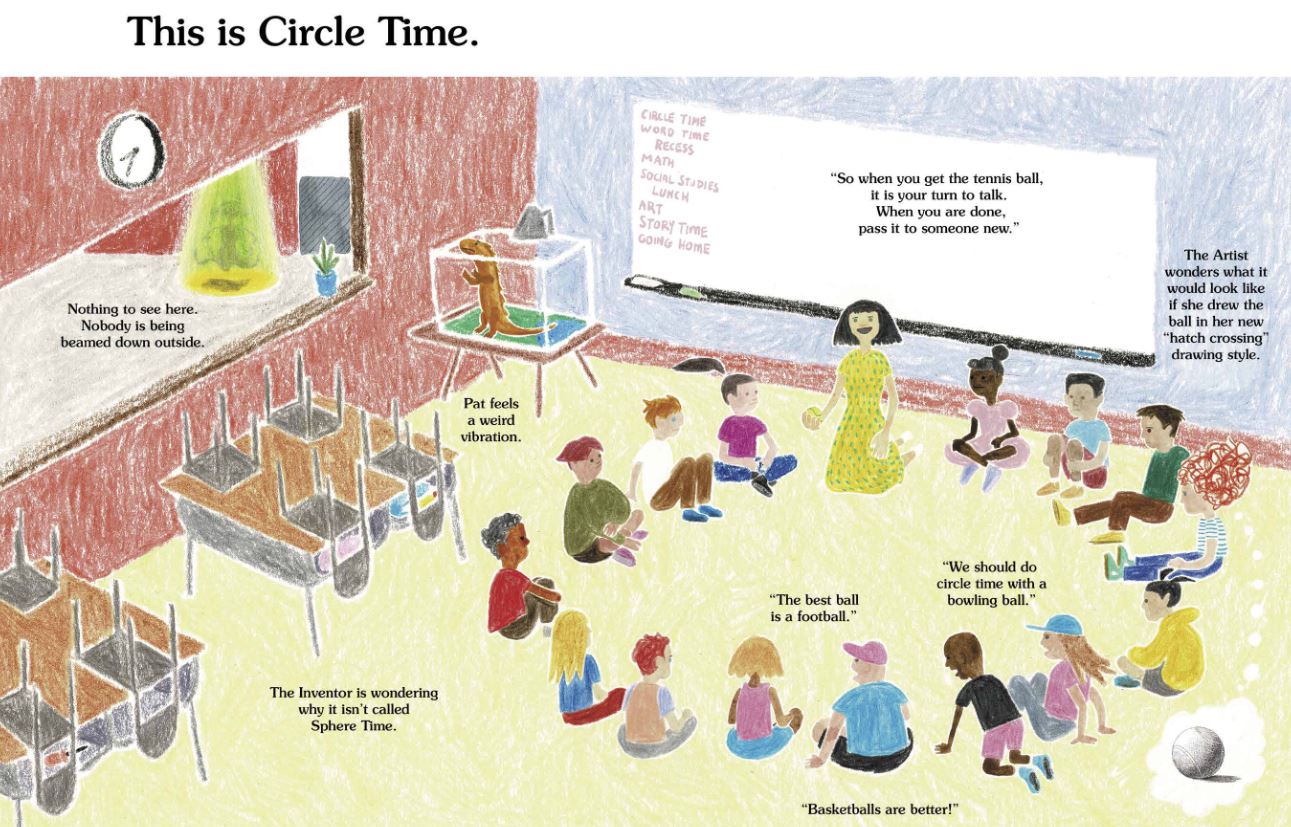
The core challenge Beckmeyer set for himself was how to weave these six stories together, ensuring that even with minimal character interaction, each still had an effect on the others. This isn't merely ambitious; it's logistically complex, especially given the spatial and format limitations of a picture book. A typical picture book might focus on one or two main characters; managing six, each with their own evolving storyline, demands a serious degree of planning.
He reveals that while he had even more background stories initially, keeping six distinct narratives going was the maximum he could manage effectively within the picture book format. This tells us a lot about the inherent constraints of the medium: large illustrations, limited text, and the need for immediate visual and narrative clarity for a young audience. It’s a puzzle, as he describes it, and he clearly thrives on "strict, challenging and weird" parameters.
The Power of "Nobody" and the Unnamed
One of the more intriguing structural decisions Beckmeyer made was how he named his characters. Only two, Pat and Nobody, get anything resembling a personal identifier. The rest are referred to by their primary activities: "The Inventor," "The lead Sports Kid." This isn't arbitrary; it’s a smart move to streamline the narrative and quickly establish who's who and what they're about. It allows readers to immediately grasp a character's essence without getting bogged down in an ensemble cast's worth of names.
"Nobody" is particularly clever. The character literally is "Nobody," a stealthy presence initially, then just a moniker, never revealing their true name (which Beckmeyer suggests wouldn't be pronounceable by human tongues anyway). This offers a touch of playful mystery. Pat, on the other hand, is cast as someone with almost a "magical" ability to discern truth, suggesting a deeper, more intuitive understanding of the classroom's hidden dynamics.
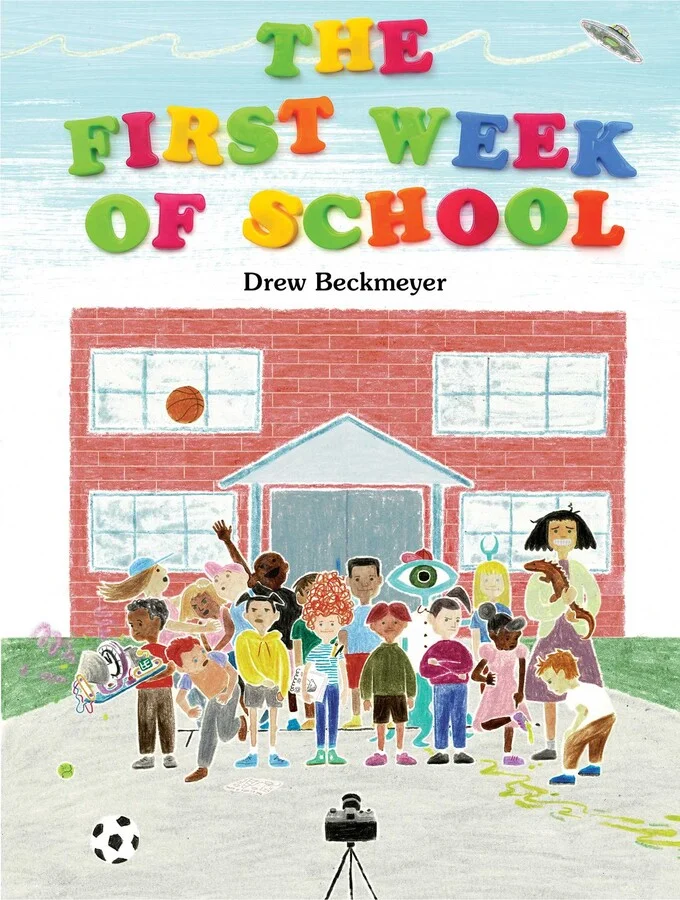
Which raises the question: how do you keep these distinct stories visually separate yet cohesive?
Illustrations as Navigational Tools
The interplay between text and illustration becomes paramount here. Beckmeyer understood that with so much narrative complexity, the illustrations needed to remain relatively simple. They serve as guides, allowing the reader's eye to navigate the page and connect snippets of text to the corresponding character’s actions. On some spreads, a specific reading order is implied, while on others, the reader can explore freely, assembling the pieces of the story as they go.
Initially, Beckmeyer even aimed for individual character stories that could be followed independently throughout the book, but had to adjust for overall coherence. That tells you something about the balancing act involved. It’s a testament to his precision that he even considered it, and a demonstration of his adaptability that he knew when to pull back for the greater good of the full narrative experience.
The Enduring Lesson
*The First Week of School* isn't just a children's book. It's an object lesson in how an author’s real-world experience can fuel truly innovative storytelling. Beckmeyer isn’t just writing for kids; he's translating a sophisticated understanding of human (or kid) dynamics into an accessible, engaging format. He's showing us that picture books, far from being narratively simplistic, can be canvases for intricate, multi-layered explorations of connection and individuality.
For those of us watching the publishing space, this kind of work is a reminder that innovation isn't always about new technologies or marketing blitzes. Sometimes, it’s about a skilled craftsman taking a familiar form and bending its rules, quietly pushing the boundaries of what’s possible within established genres. It’s this kind of thoughtful, deliberate storytelling that sticks with you, proving that even in a book ostensibly for the youngest readers, there can be profound depth and a genuine challenge to our narrative expectations.