The publishing world is at a crossroads, caught between the siren call of new technologies like generative AI and the fundamental principles of textual integrity and authorial intent. The industry’s response to these forces isn’t just a matter of adapting to market trends; it’s a defining moment for what we understand a 'book' to be, and for the very concept of human creativity in the digital age. Will publishers and booksellers become custodians of a stable literary record, or will they yield to the perceived inevitability of an AI-driven, ever-mutable textual future?
The Erosion of Originality
We're seeing a creeping normalization of practices that directly challenge the idea of a fixed literary work. It's not just about AI creating new content; it's about altering the old. Take, for instance, a recent edition of Virginia Woolf’s To the Lighthouse. Readers might encounter a "NOTE TO THE READER: This book was written in 1927. We are publishing it as it was originally published, without changes, as a work of historical importance."
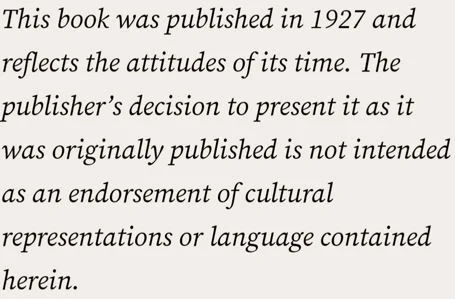
Here’s the thing: a note like this shouldn’t be remarkable. The fact that it is suggests a growing expectation that texts, even canonical ones, are fair game for revision. It signals that a publisher might just as easily have opted to "update" Woolf’s language or themes to align with contemporary sensibilities. This isn't theoretical. As a Washington Post opinion piece pointed out, the estate of Ursula K. Le Guin authorized changes to her Catwings series, altering words like ‘dumb,’ ‘lame,’ ‘stupid,’ and ‘queer’ in several instances across three books. The rationale given was that the meaning of ‘queer’ has shifted since the book's 1988 publication, and the estate wanted to ensure the author's original point came across clearly. The article, "21st-century editors should keep their hands off 20th-century books," highlights the inherent tension here.
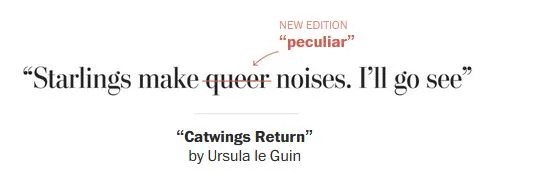
While the intent may be benign – to preserve clarity or avoid inadvertent offense – it sets a precedent. Once the door is open to editorial changes based on shifting cultural norms, where does it close? It implies that no text is truly finished, that an author's final manuscript is just a provisional draft awaiting future refinement.
The AI Temptation: A Faustian Bargain?
This textual revisionism, driven by cultural considerations, shares a worrying throughline with the economic pressures pushing publishers toward generative AI. Bertelsmann CEO Thomas Rabe, for instance, sees significant opportunity. Speaking to the Financial Times, Rabe suggested that for creative industries, generative AI could be "very positive provided we… understand its potential and threats." He believes it's "on balance… probably more of an opportunity," particularly if publishers own the copyright to content used to train the software, allowing them to "in theory generate content like never before."
This perspective, while pragmatic in a purely business sense, echoes a familiar temptation. It's a bit like Saruman arguing with Gandalf in The Lord of the Rings, urging an alliance with Mordor. Saruman's logic is seductive: "Its victory is at hand; and there will be rich reward for those that aided it. As the Power grows, it’s proved friends will also grow; and the Wise, such as you and I, may with patience come at last to direct its courses, to control it."
The idea that we can co-opt a dominant, potentially destructive force and somehow "control it" for our benefit is a recurring delusion throughout history. Gandalf’s retort rings true: "I have heard speeches of this kind before, but only in the mouths of emissaries sent from Mordor to deceive the ignorant. I cannot think that you brought me so far only to weary my ears." The core issue isn’t the technology itself, but the willingness to sacrifice fundamental principles—like the sanctity of an author's original work or the value of human creation—for perceived commercial advantage.
Beyond Editing: The Specter of Synthetic Authorship
The real danger, I think, is a slippery slope. If we accept that older texts can be modified for modern audiences, and simultaneously embrace AI as a tool for "generating content like never before," we quickly arrive at a future where the line between human and machine creation blurs entirely. Imagine apps allowing readers to "optimize" Jane Austen novels, perhaps requesting Sense and Sensibility with "15% added sex and 10% added violence." Or consider the potential for "new AI-generated novels by Toni Morrison" or "new poems by William Butler Yeats."
This isn't just about editing; it's about undermining the very concept of authorship. It risks creating a literary landscape where the original human voice is just one data point, raw material for algorithms to remix, refine, or outright invent. We're talking about a future where a reader might not know if they're engaging with a human author’s deeply considered vision or an algorithm's statistical pastiche.
The Stakes for Human Creativity
What's truly at stake here is far more than just profit margins or market share. It's the integrity of the human literary enterprise itself. When texts become fluid, subject to constant revision or algorithmic generation, we lose the anchor of a stable cultural record. We lose the unique, irreplaceable voice of an author rooted in their time and context. The act of reading becomes less about engaging with a specific, curated human creation and more about passive consumption of endlessly customizable data streams.
The instinct to capitulate, to declare such changes "inevitable," is understandable. It's Denethor's grim prognosis: "against the Power that now arises there is no victory. To this City only the first finger of its hand has yet been stretched. All the East is moving. And even now the wind of thy hope cheats thee and wafts up Anduin a fleet with black sails. The West has failed. It is time for all to depart who would not be slaves."
But that passive fatalism is precisely what makes defeat a certainty. Gandalf’s response rings with timeless clarity: "Such counsels will make the Enemy’s victory certain indeed." To simply accept and assimilate these forces is to accelerate the very dehumanization they represent.
Drawing a Line in the Sand
This isn't just an abstract debate for academics. It has immediate, tangible consequences for creative professionals across the board. Look at the Writers Guild of America and the Screen Actors Guild, actively striking to protect their creative and professional lives against the threat of generative AI. They understand the stakes: the right to control their own work, to be compensated fairly, and to ensure that human creativity remains central.
For the publishing industry, it's time to stop wondering about getting bitten by the hand that's feeding you and go back to feeding ourselves, with integrity and quality. This isn't about Luddism; it's about principled resistance. Rather than embracing every "opportunity" that comes with textual revisionism and generative AI, major publishers and bookselling trade organizations ought to make a formal, unequivocal statement rejecting AI-driven textual alterations and the broader erosion of authorial integrity. They should advocate for clear ethical guidelines around AI's use in content creation, prioritizing human authorship and preserving the historical fidelity of published works.
The future of literature, as a uniquely human endeavor, depends on it. We must choose to provide an island of stability in a sea of ephemeral media, fostering active engagement with the literary continuum, rather than passively allowing algorithms to reshape our stories and, in turn, ourselves.